
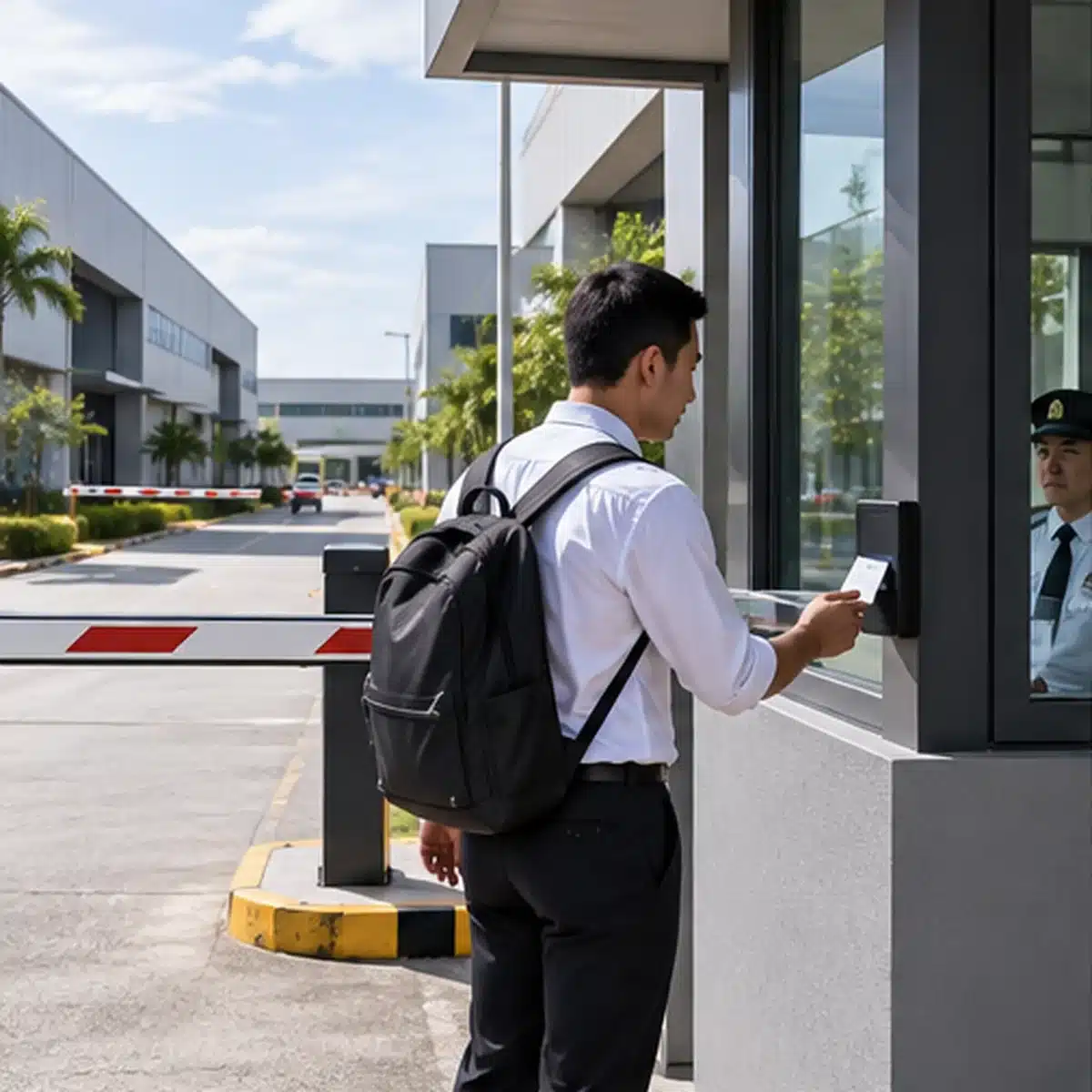
PEZA Facility Access Control Philippines: Security Planning for Industrial and Business Sites
PEZA facility access control in the Philippines should do more than unlock doors. Industrial estates, factories, warehouses, BPO facilities, laboratories, data rooms, utilities, and multi-building campuses often need to manage employees, contractors, visitors, vehicles, shifts, and restricted zones at the same time.
A practical design starts with people, zones, schedules, workflows, and emergency requirements. The credential reader is only one part of the system. The complete solution can include access controllers, electronic locks, turnstiles, visitor management, CCTV, parking controls, time attendance, network infrastructure, reporting, and preventive maintenance.
Access Control Systems Philippines
Explore Infinite Systems solutions for door access, RFID, biometrics, mobile and QR credentials, turnstiles, elevators, visitors, and integrated building security.
Permissions by department, shift, building, and zone.
Time-bound access for approved work areas and schedules.
Temporary credentials, host workflows, and controlled movement.
Higher security controls for critical rooms and operations.
What PEZA Facility Access Control Should Cover
A PEZA locator may have very different security needs across one site. Office areas may prioritize convenience and fast employee entry, while production, server, utility, warehouse, laboratory, and engineering areas may require tighter permissions and stronger identity verification.
The design should identify each controlled point, who is allowed to use it, when access is valid, what happens after hours, how temporary users are handled, and what events must be recorded for investigation or operational review.
Office and Administration
Main entrances, executive offices, records rooms, finance areas, meeting rooms, and tenant or department zones.
Production and Operations
Production entrances, clean or controlled areas, engineering rooms, maintenance zones, warehouses, and loading-related access.
Critical Infrastructure
Server rooms, telecom rooms, electrical rooms, generator areas, utility spaces, and other higher-risk locations.
Recommended Access Control Architecture
01 – Establish security zones
Classify public, staff, production, warehouse, technical, administrative, and high-security spaces. Define who needs access and during which schedules.
02 – Select credentials by risk and throughput
RFID can support high-volume employee access. Biometrics or supported multi-factor methods can be considered for selected higher-security areas. Mobile and QR credentials can support appropriate temporary or visitor workflows.
03 – Match the physical entrance control
Doors, speed gates, tripod turnstiles, full-height turnstiles, and vehicle barriers should match the required security level, traffic volume, accessibility, and environment.
04 – Plan integrations early
Confirm CCTV, visitor management, time attendance, parking, elevator, HR, network, and reporting requirements during design rather than adding them after installation.
05 – Commission and document
Test readers, locks, controllers, alarms, schedules, credentials, backup power, communications, interfaces, and emergency-related behavior before turnover.
RFID, Biometric, Mobile, and QR Access
There is no single best credential for every PEZA facility. A practical project may use several credential types according to the user population and security level.
RFID
Useful for fast employee movement, centralized enrollment, and scheduled permissions.
Biometric
Can add stronger identity verification for selected restricted areas where appropriate.
Mobile and QR
Useful for supported digital credentials, visitors, temporary users, and selected contactless workflows.
Turnstiles for Employee and Contractor Entry
For facilities with high pedestrian volume, access readers alone may not provide the physical lane control required at the main entrance. Turnstiles can create a clear one-person-per-authorization workflow and can be integrated with supported RFID, biometric, mobile, or visitor credentials.
Speed gates can suit corporate or high-finish entrances, tripod turnstiles are commonly considered for practical staff control, and full-height turnstiles may suit more restrictive perimeter or industrial applications. Selection should account for throughput, accessibility, environmental exposure, emergency requirements, and security policy.
Contractor and Visitor Access
PEZA facilities often depend on contractors, suppliers, auditors, service technicians, consultants, and visitors. Their access should not be managed as if they were permanent employees.
A visitor or contractor workflow can include pre-registration, host approval, identity verification, validity dates, allowed zones, schedules, temporary credentials, check-in and check-out, and automatic expiration. These controls can reduce the risk of temporary credentials remaining active after the authorized visit or work period.
View Visitor Management Systems
Connect Access Control with Other Facility Systems
CCTV
Compatible integrations can help operators correlate access events with video during review and investigation.
Time Attendance
Where the selected systems support it, credential events can complement workforce attendance workflows.
Parking
Employee, contractor, and visitor vehicle access can be coordinated with RFID, LPR, QR, or other supported methods.
Network Infrastructure
Controllers, servers, workstations, cameras, and gateways depend on properly planned network and structured cabling infrastructure.
Operational Controls That Matter After Installation
A technically sound installation can still become difficult to manage if operational procedures are weak. Facilities should define who can enroll users, approve contractors, change access groups, recover lost cards, review events, back up the database, and authorize system changes.
Enrollment, replacement, suspension, expiration, and revocation.
Shifts, holidays, after-hours access, and temporary work periods.
Denied access, forced doors, held doors, and unusual access patterns.
Backup power, database backup, network health, and maintenance planning.
Emergency Egress and Fire Alarm Coordination
Access control must never be designed in isolation from life-safety requirements. Door hardware, fail-safe or fail-secure behavior, emergency release, fire alarm interfaces, manual override, and egress provisions should be coordinated with the approved life-safety design, applicable codes, equipment requirements, and project stakeholders. The required behavior can differ by door type, occupancy, hardware, and system architecture.
Preventive Maintenance and Long-Term Support
PEZA facilities operate continuously or across multiple shifts, so degraded readers, door alignment problems, weak backup batteries, network faults, controller issues, and outdated permissions can become operational risks. Periodic inspection and testing should cover the complete access path, not only the reader.
Explore Preventive Maintenance Services
Why Use a Systems Integrator for a PEZA Facility?
A facility-wide access project can involve security, IT, door hardware, turnstiles, vehicle barriers, civil works, power, networks, fire alarm interfaces, databases, software, visitor procedures, and long-term maintenance. An integrator helps coordinate those interfaces so the project is designed as one operating system rather than a collection of disconnected devices.
Frequently Asked Questions
Can one credential work across several areas?
Yes, where the selected platform and interfaces support it. A user can be assigned different permissions for doors, turnstiles, and other compatible access points.
Can contractor access expire automatically?
Supported systems can apply validity dates, schedules, and access groups so temporary credentials expire without remaining active indefinitely.
Can access control integrate with CCTV?
Yes, where compatible interfaces are available. Access events can be associated with video workflows to support verification and investigation.
Is biometric access required for PEZA facilities?
Not as a universal rule. Credential selection should be based on the facility’s security policy, risk level, operational requirements, privacy considerations, and the capabilities of the selected platform.
Can employee access be limited by shift?
Yes. Supported systems can use schedules and access groups so permissions are valid only during approved work periods or shifts.
Should the system be maintained after turnover?
Yes. Readers, locks, doors, controllers, power supplies, networks, databases, software, and integrations should be inspected and tested periodically according to the system design and operating environment.
Explore solution
Explore solution
Explore solution
Explore solution
Need Access Control for a PEZA Facility?
Infinite Systems can assess entrances, user groups, shifts, contractor workflows, restricted areas, turnstiles, parking, CCTV, and other required integrations for a practical facility-wide design.