
INFINITE SYSTEMS INSIGHTS
School Perimeter Security Systems for Safer Campus Entrances
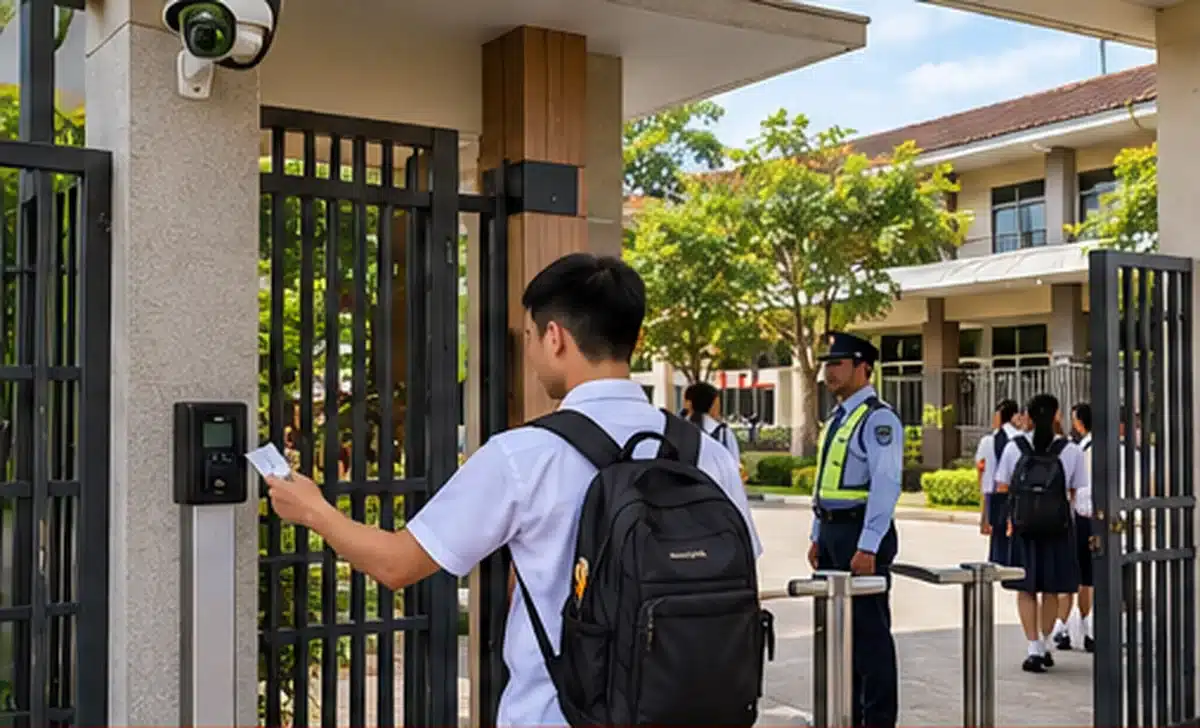
School perimeter security is most effective when gates, CCTV, access control, screening, visitor management, and guard procedures work together as one coordinated campus security system.
Schools need a clear and practical way to control who enters the campus, monitor activity around gates and surrounding boundaries, and support screening procedures when required. Security measures should also work efficiently during student arrival, dismissal, parent drop-off, school events, and other periods of high campus activity.
A layered security design reduces dependence on any single device or guard post. By combining physical barriers, surveillance, controlled access, screening, and established security procedures, schools can create a more organized and manageable entrance environment.
Why Layered School Perimeter Security Matters
A school perimeter security system should address several security requirements at the same time. The objective is not simply to install equipment at the gate, but to establish a controlled, observable, and practical entry process.
Direct students, faculty, staff, visitors, and service personnel through designated and monitored access points.
Support non-contact screening of people and belongings when required by school policy and applicable guidance.
Use CCTV and guard observation to monitor gates, queues, approaches, and perimeter areas that require additional visibility.
Maintain visitor and access records that can support incident review, investigation, and accountability.
Core Components of a School Perimeter Security System
Every school has different campus layouts, entrance conditions, traffic patterns, and security requirements. A perimeter security solution may combine several of the following components:
Fences, walls, pedestrian gates, vehicle barriers, and designated entrances help establish where campus access should take place.
Cameras can provide coverage of gates, approaches, queues, parking areas, and perimeter locations that require monitoring.
Electronic access control can restrict selected gates, offices, laboratories, administrative areas, and other controlled rooms.
Walk-through or handheld metal detection and baggage inspection equipment can support school-approved screening procedures.
Visitor logging, temporary identification, destination control, and approval procedures help manage guests entering the campus.
Security personnel remain an important part of the system by observing activity, responding to alerts, and implementing established procedures.
How a Typical School Entrance Security Workflow Operates
The exact workflow depends on the school’s policies, campus layout, and security requirements. A typical controlled entrance may follow a process such as:
Students, employees, visitors, and service personnel approach the designated campus entrance.
Security personnel verify whether the entrant is a student, employee, visitor, parent, contractor, or service provider.
People and belongings are screened using the school’s approved method when screening is required.
Authorized users continue through the controlled entrance while visitors are logged and directed to the appropriate destination.
CCTV, access records, and guard observation provide additional visibility and support later review when necessary.
Where School Perimeter Security Can Be Applied
Perimeter security does not have to be limited to the main school gate. Different areas of a campus may require different levels of monitoring, screening, or access restriction.
- Main pedestrian entrances and student gates
- Faculty and employee entrances
- Vehicle gates and parking entrances
- Parent drop-off and pick-up areas
- Visitor reception and administration areas
- Laboratories, workshops, and specialized facilities
- Computer rooms and other restricted areas
- Perimeter sections with limited visibility or higher security requirements
School Entrance Screening and Security Equipment
Screening requirements vary between schools and should be based on the school’s approved policies, site conditions, and applicable guidance.
Provide a designated screening point for people entering the campus where required.
Support secondary or targeted screening procedures when required.
Support controlled inspection workflows for bags and other belongings where applicable.
Help regulate entry to selected doors, gates, offices, and restricted facilities.
CCTV and Access Control Integration
CCTV and access control can complement each other when deployed as part of a coordinated security design. Cameras provide visual information while access control determines which credentials or users are permitted through selected controlled points.
View activity around gates, screening areas, queues, and campus approaches.
Control access to administrative offices, laboratories, storage areas, and other restricted rooms.
Use access records together with video footage when reviewing security events.
Give security personnel better visibility across important campus areas.
The objective is to make CCTV, access control, screening, and guard operations work together rather than treating each security component as an unrelated installation.
Planning for Peak School Traffic
School entrances can experience significant changes in traffic throughout the day. Student arrival, dismissal, lunch periods, examinations, school activities, and parent visits can all affect how security personnel and equipment are used.
Avoid unnecessary bottlenecks at normal student entry and exit points.
Provide a clear route from the entrance to reception without allowing uncontrolled access to the campus.
Security measures should not prevent appropriate emergency evacuation or create unsafe exit conditions.
Entrance design should account for accessibility requirements and practical movement through the checkpoint.
Planning Considerations for School Perimeter Security
The security layout should account for peak student arrival, parent drop-off, visitor queues, emergency egress, weather protection, accessibility, and the available space around the entrance.
Screening equipment should be positioned so that the designated security checkpoint is clear and practical to use. The layout should also minimize opportunities for people to bypass the screening or enter through uncontrolled routes.
DepEd Order No. 006, s. 2026 emphasizes safe school environments and authorizes non-contact entry inspection methods such as electronic scanners, bag scanners, handheld metal detectors, or search sticks. Schools should align any implementation with applicable DepEd guidance and their own approved security procedures.
Why Work With a Security Systems Integrator?
A school security project may involve physical barriers, gates, electrical power, data cabling, CCTV, access control, screening equipment, visitor procedures, and guard operations. These components need to work together within the school’s existing layout and daily activities.
A security systems integrator can help assess the site, identify security gaps, coordinate equipment, and develop a practical installation approach. For schools with budget or operational limitations, the system can also be planned in phases so priority areas can be addressed first.
Frequently Asked Questions
What is school perimeter security?
School perimeter security is the coordinated use of physical barriers, monitored gates, CCTV, access control, visitor procedures, screening measures, and security personnel to manage and monitor movement into and around a campus.
Do all schools need metal detectors and baggage scanners?
No. The appropriate screening level depends on school policy, site conditions, traffic volume, available security personnel, risk considerations, and applicable guidance.
Can school perimeter security be implemented in phases?
Yes. Schools can prioritize key entrances and begin with measures such as CCTV, perimeter control, and visitor procedures, then expand into access control and screening equipment based on requirements and available budget.
Can perimeter security integrate with access control?
Yes. Controlled gates and restricted doors can be incorporated into an access control strategy using appropriate credentials, readers, and management procedures.
Can CCTV be used with school entrance screening?
Yes. CCTV can provide additional visibility around screening areas, queues, gates, and approaches, helping security personnel monitor activity and review incidents when necessary.
How should a school choose security equipment?
Equipment should be selected based on the school’s layout, entrance traffic, security procedures, required coverage, available infrastructure, maintenance requirements, and future expansion plans.
Related School Security Solutions
Monitor gates, perimeter areas, entrances, parking zones, and other critical campus locations.
Manage authorized access to selected campus doors, gates, offices, and restricted facilities.
Improve visitor registration, identification, destination control, and record keeping.
Support school-approved entrance screening using appropriate detection and inspection equipment.
Planning a School Perimeter Security Upgrade?
Infinite Systems can help assess your campus entrances, perimeter coverage, CCTV requirements, access-control needs, screening workflow, and visitor process to develop a practical security solution.