
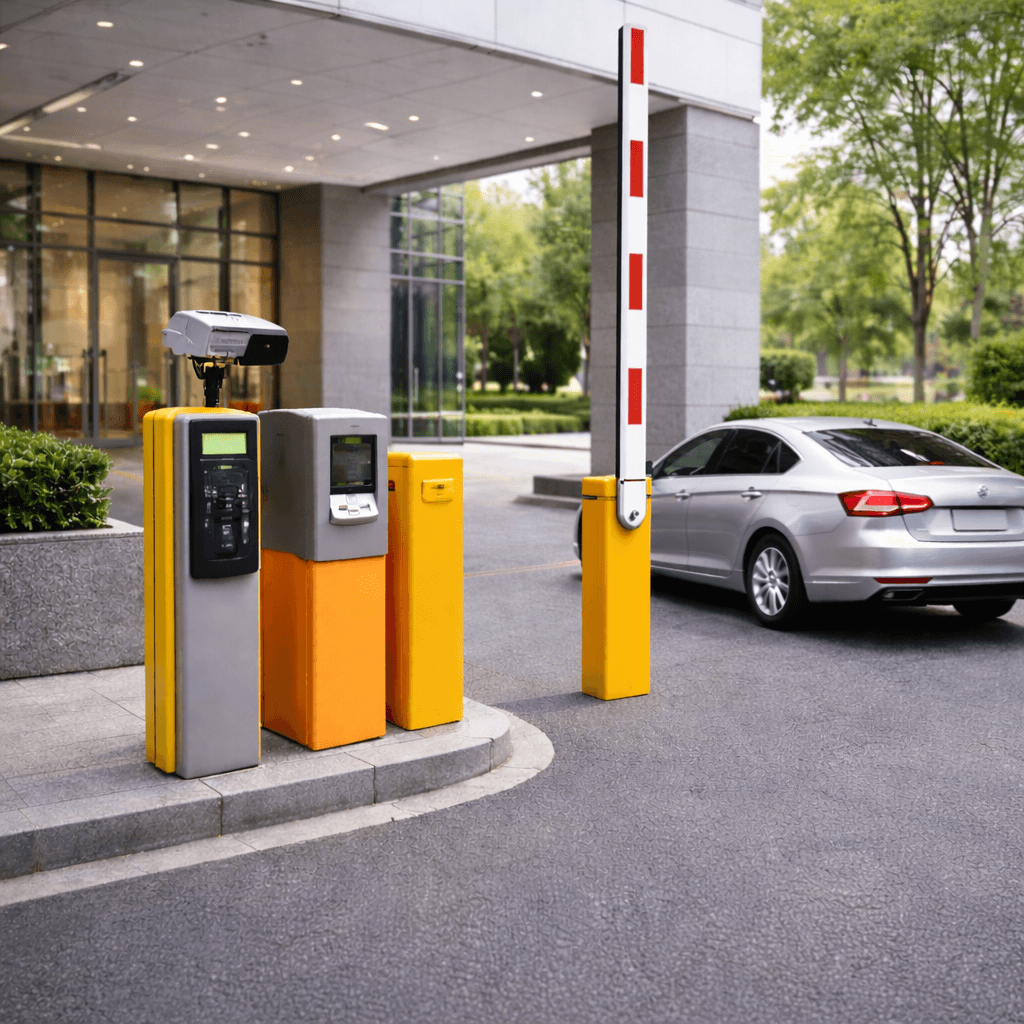
Parking Barrier System Philippines: RFID, QR and LPR Vehicle Access
A well-designed parking barrier system helps commercial buildings, condominiums, offices, malls, schools, hospitals and industrial sites control vehicle entry without relying entirely on manual guard procedures. The most effective systems combine the boom barrier with the right credential, safety sensors, access rules and management workflow for the property.
Planning a Parking Barrier System?
Infinite Systems designs and integrates automatic boom barriers with RFID, QR, LPR or ANPR, visitor management, CCTV, intercoms and parking management functions.
Automate entry and exit lanes with configurable authorization rules.
Use RFID, QR, LPR, cards, tickets or guard approval depending on the site.
Loop detectors, photocells and proper lane logic support safer operation.
Connect parking with visitors, access control, CCTV and reporting.
What Is a Parking Barrier System?
A parking barrier system controls vehicle movement through a dedicated entrance or exit lane. The physical barrier is usually a motorized boom gate, but the complete system also includes a method of authorization, safety detection, control electronics and site-specific operating logic.
The barrier should not be selected in isolation. A condominium with resident vehicles, delivery traffic and guests needs a different workflow from a warehouse, office tower or paid parking facility. The right design starts with traffic volume, lane width, vehicle mix, security level, operating hours and the required visitor process.
Boom Barrier
Physically controls the lane and opens when the controller receives an authorized command.
Credential Reader
Identifies the vehicle or user through RFID, QR, LPR, cards, tickets or another supported method.
Safety Detection
Vehicle loops, photocells and other devices help reduce unsafe boom movement when properly configured.
Management Software
Provides permissions, transaction history, visitor records and reporting where required.
Choosing RFID, QR or LPR
No single vehicle credential is best for every property. Many successful parking barrier installations use more than one access method so recurring users, guests, deliveries and exceptions can be handled differently.
RFID or UHF Vehicle Access
Long-range RFID is well suited to residents, tenants, employees and fleet vehicles that enter frequently.
Best fit: recurring authorized vehicles requiring fast, low-friction entry.
QR Visitor Access
QR credentials are useful for temporary parking permissions because they can be issued for a defined visit or validity period.
Best fit: visitors, deliveries, contractors, events and temporary vehicle access.
LPR or ANPR
License plate recognition can identify and log vehicles using plate data when the camera view and operating conditions are suitable.
Best fit: audit trails, vehicle verification and plate-based access workflows.
LPR and ANPR Need Proper Site Design
LPR performance depends on more than the camera specification. Plate condition, approach angle, lane speed, lighting, reflections, rain, dirt and vehicle position can all affect the quality of a plate capture. Philippine sites may also encounter temporary plates, missing front plates or vehicles that regularly change.
For higher-control applications, LPR can be paired with another credential rather than treated as the only key. RFID plus LPR is a practical combination for recurring users, while QR plus LPR can support visitor verification. Guard confirmation remains useful for exceptions and unreadable plates.
Barrier Safety Is Part of the System Design
Automatic boom barriers are moving mechanical equipment, so vehicle detection and safe operating logic are important. Depending on the selected equipment and lane design, the installation may include induction loops, photocells, emergency release functions, warning indicators and configurable opening or closing behavior.
Traffic flow should also be considered. Separating resident and visitor workflows, providing enough vehicle stacking distance and positioning readers before the barrier can reduce congestion and help security personnel handle exceptions without blocking the entire entrance.
Recommended Parking Access Workflows
Condominiums
RFID for residents, QR or visitor approval for guests and deliveries, with optional LPR for verification and logging.
Office Buildings
Tenant vehicle credentials, temporary visitor permissions and centralized transaction records for property management.
Industrial and Logistics Sites
Employee or fleet credentials combined with guard procedures for trucks, contractors, suppliers and irregular vehicle movements.
Integrating Parking with Building Security
A parking barrier becomes more useful when vehicle access is coordinated with the property’s other security systems. Depending on the required workflow and available interfaces, parking can be connected to visitor management, access control, CCTV, intercoms, reporting dashboards and alerting platforms.
For example, a visitor may receive a temporary QR credential linked to a visitor record, while a registered tenant uses a long-range RFID credential for daily entry. CCTV can provide visual verification of vehicle events, and parking transaction logs can support investigations or operational reporting.
Issue temporary credentials and connect vehicle access with guest records.
Coordinate parking permissions with user or tenant access where supported.
Associate vehicle events with recorded video for verification and investigation.
Maintain transaction histories and exception records for operations teams.
Preventive Maintenance for Parking Barriers
Parking barriers combine mechanical movement, electronic controls and field sensors. Regular inspection can help identify alignment issues, worn components, dirty sensors, loose terminations, reader problems and configuration changes before they become major operational disruptions.
Maintenance frequency should reflect the barrier model, operating cycles, environmental conditions and manufacturer recommendations. High-traffic sites normally require closer attention than low-volume entrances.
Frequently Asked Questions
Can RFID and QR be used in the same parking barrier system?
Yes. A common design uses RFID for regular users and QR for visitors, deliveries or temporary parking access.
Is LPR reliable for parking access?
It can be effective when camera placement, lighting, lane speed and plate visibility are well controlled. A secondary credential or guard fallback may still be appropriate for critical sites.
Can one system handle multiple entrance and exit lanes?
Yes. Multi-lane systems can share management software and permissions, but each lane still needs properly planned readers, sensors, controllers and traffic logic.
What happens if a vehicle credential fails?
The site should have an exception workflow such as guard verification, intercom approval, temporary QR access or another authorized credential.
Can parking barriers integrate with visitor management and CCTV?
Yes, where compatible interfaces are available. Integration can connect guest credentials, vehicle events, CCTV verification and reporting into a coordinated workflow.
Explore the solution
Explore the solution
Explore the solution
Read common questions
Need a Parking Barrier System for Your Property?
Infinite Systems can assess your lane layout, vehicle traffic, security workflow and preferred credential technologies, then design an appropriate parking barrier solution for the site.