
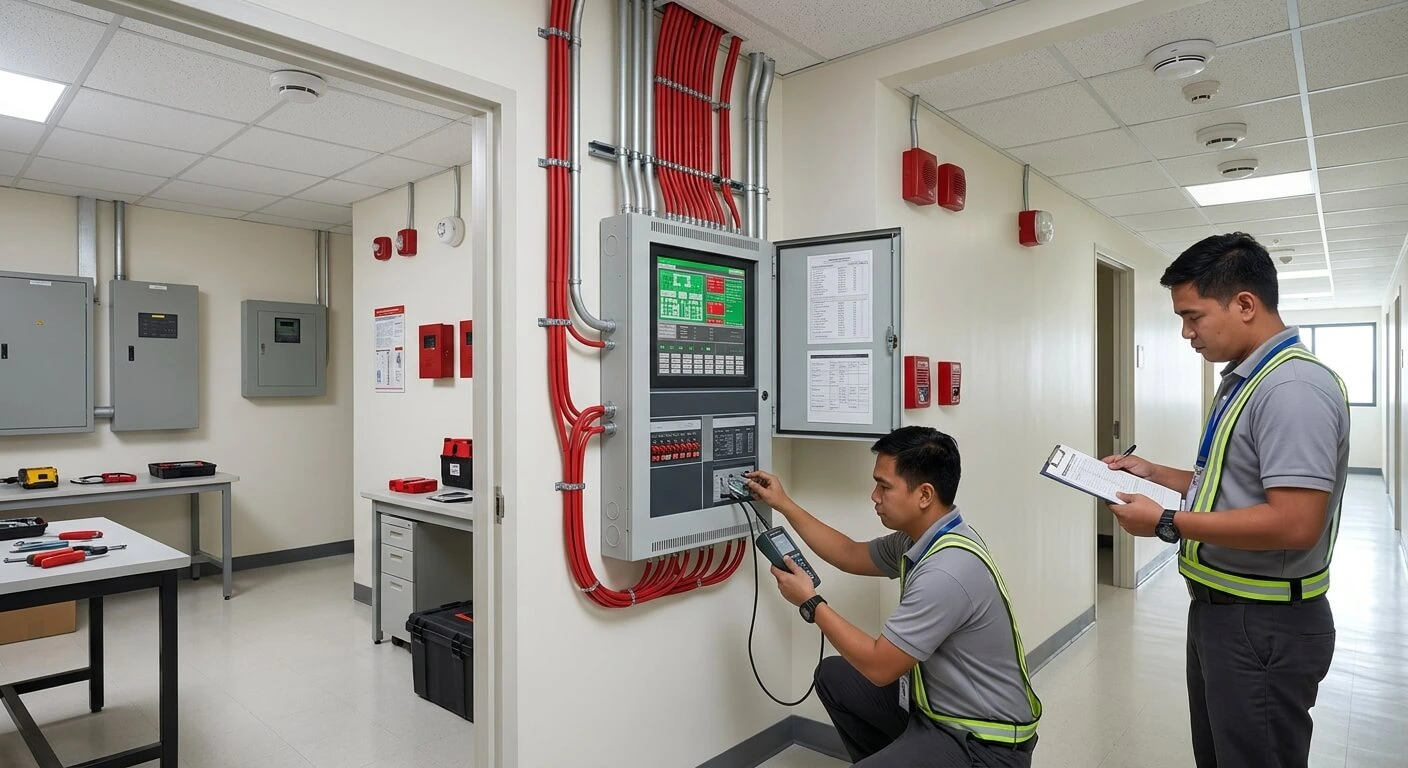
INFINITE SYSTEMS INSIGHTS:
Fire Alarm Preventive Maintenance in the Philippines: What Should Be Checked?
Learn what a professional fire alarm preventive maintenance scope should cover across control panels, detectors, notification appliances, standby power, interfaces, event records and corrective work so the system remains ready to perform its intended life-safety function.
ENGINEERING NOTE
Define the installed system, site conditions, operating requirements and applicable project criteria before finalizing a maintenance scope or BOQ.
Fire alarm maintenance should be based on the actual installed equipment and approved system design. The scope may include control equipment, initiating devices, notification, standby power, interfaces, communications and documentation. Field conditions should be verified before corrective work or replacement requirements are finalized.
01 / INSPECT
Control Equipment
Check panels, annunciators, power supplies, batteries, indications and visible equipment condition.
02 / VERIFY
Field Devices
Review detectors, manual devices, modules, circuits and representative device operation.
03 / TEST
Notification & Interfaces
Verify required notification and approved cause-and-effect interfaces within the agreed testing scope.
04 / REPORT
Document & Correct
Record faults, impairments, failed devices, interface results and recommended corrective work.
01 / LIFE-SAFETY SYSTEM
Why Fire Alarm Maintenance Is Different
A fire alarm system is part of a building’s life-safety infrastructure. Its purpose is not simply to display a normal condition on the control panel, but to detect specified conditions, communicate them to occupants or responsible personnel and activate the required responses defined by the approved system design.
For this reason, preventive maintenance should evaluate more than whether the panel is powered. The service scope should consider control equipment, initiating devices, notification appliances, standby power, communication paths, interfaces and event history as applicable to the installed system.
Detect
Initiating devices should remain available to detect the conditions for which they were designed and installed.
Notify
Required notification appliances should be checked according to the approved system design and maintenance scope.
Respond
Approved interfaces should produce the intended building response where those interfaces form part of the fire alarm design.
02 / CONTROL EQUIPMENT
Fire Alarm Control Panel and Power Checks
The fire alarm control panel provides the central interface for system status, faults, alarms and supervisory conditions. Preventive maintenance should review the condition of the panel and associated equipment rather than simply clearing indications that appear on the display.
Inspect the enclosure, display, controls, indicators and accessible connections for visible deterioration or damage.
Review active trouble, supervisory or abnormal conditions and identify recurring faults rather than simply resetting them.
Check applicable power-supply condition and indications according to the installed equipment and maintenance procedure.
Review batteries, charger condition and applicable standby-power testing or replacement requirements.
Event history can provide useful information about intermittent or recurring problems. A fault that repeatedly appears and is cleared without determining its cause may indicate an unresolved maintenance issue.
03 / INITIATING DEVICES
Detectors, Manual Devices and Field Modules
Field devices are essential to the fire alarm detection process. Maintenance should consider the physical condition and appropriate functional verification of detectors, manual initiating devices, input modules, output modules and other field equipment included in the installed system.
Smoke & Heat Detectors
Inspect physical condition, contamination indicators and appropriate functional response based on the device type and maintenance procedure.
Manual Initiating Devices
Check accessible condition, identification and functional operation where testing is included in the approved maintenance scope.
Modules & Points
Review relevant input/output modules, point status and communication conditions where applicable.
Addressable systems may provide additional diagnostic information. Depending on the platform, maintenance can include reviewing missing devices, communication faults, unexpected point conditions, duplicate addressing concerns or recurring contamination and sensitivity indications.
Device testing should be planned so that alarms and associated building responses are coordinated with facility personnel. Testing without proper notification or coordination can disrupt building operations and may activate connected systems.
04 / NOTIFICATION
Notification Appliances Should Be Included in the Maintenance Scope
Detection is only one part of the fire alarm sequence. Where notification appliances form part of the installed system, the maintenance scope should include appropriate verification of audible and visual notification equipment according to the approved design and applicable testing requirements.
Audible Notification
Check applicable sounders, horns or speakers within the agreed testing scope.
Visual Notification
Verify applicable visual notification appliances and visible fault conditions.
Circuits & Devices
Review relevant notification circuits and device status where diagnostics are available.
Coverage Requirements
Consider whether changes to the facility may affect the original notification arrangement or system design.
05 / INTERFACES & CAUSE-AND-EFFECT
Test Approved Fire Alarm Interfaces and Building Responses
Modern fire alarm systems may interact with other building systems. These interfaces can be important to the intended emergency response and should be included in maintenance where they form part of the approved cause-and-effect design.
Access Control & Turnstiles
Where integrated, verify the approved fire-response behavior of doors, locks or turnstiles within the agreed test scope.
Elevator Functions
Where part of the approved cause-and-effect sequence, coordinate testing of relevant elevator interface functions.
Emergency Audio & BMS
Test applicable emergency audio or selected BMS monitoring interfaces where included in the system design.
Interface testing should be coordinated with affected trades and building operations. A configured connection does not necessarily prove that the intended field response still occurs correctly.
06 / COMMUNICATION & EVENT HISTORY
Review Communication Paths and Recurring Faults
Fire alarm systems may rely on signaling circuits, communication loops, network connections or other system-specific communication methods. Maintenance should review available diagnostics and identify conditions that could affect reliable operation.
Review applicable loops, circuits, communication modules and system diagnostics for abnormal conditions.
Identify missing, disabled or abnormal points where the installed platform provides this information.
Review recurring trouble, supervisory or other system events that may indicate unresolved conditions.
Compare available device lists and records with observed system conditions where documentation is available.
Recurring faults deserve particular attention. Repeatedly clearing a trouble indication without documenting the cause can make it difficult for facility teams to understand the system’s actual condition.
07 / MAINTENANCE WORKFLOW
A Practical Fire Alarm Preventive Maintenance Workflow
Review
Review equipment lists, previous reports, known faults and operating requirements.
Inspect
Inspect panels, devices, notification equipment, power supplies and accessible connections.
Verify
Verify appropriate field-device and system functions within the agreed maintenance scope.
Test
Test notification and representative interfaces where required and safely coordinated.
Correct
Identify failed devices, impairments, configuration issues and corrective requirements.
Report
Document tests, findings, unresolved conditions and recommended follow-up work.
08 / MAINTENANCE DELIVERABLES
What Should a Fire Alarm Maintenance Report Contain?
A maintenance visit becomes more useful when the results are documented clearly. The report should help the facility team understand what was inspected or tested, what faults were identified and which conditions require corrective action.
Equipment Status
Panel, annunciator, power supply, battery and relevant field-device condition.
Devices Tested
Relevant detectors, manual devices, modules and notification appliances included in the scope.
Faults & Impairments
Active or recurring faults, disabled points, failed devices and known system impairments.
Interface Results
Results of applicable cause-and-effect and building-system interface testing.
Corrective Work
Recommended repairs, replacement requirements and additional investigation.
System Records
Updated device lists, test records and other documentation where included in the agreed scope.
09 / MAINTENANCE CHECKLIST
Fire Alarm Preventive Maintenance Checklist
- Inspect the fire alarm control panel and associated annunciators
- Review active alarm, trouble and supervisory indications
- Review event history for recurring faults and abnormal conditions
- Check primary power and applicable power-supply indications
- Inspect standby batteries and charger condition where applicable
- Review battery testing or replacement requirements according to the installed system
- Inspect smoke, heat and other applicable detection devices
- Check manual initiating devices within the approved testing scope
- Review addressable device status and communication diagnostics where available
- Check relevant input/output modules and system points
- Inspect and test applicable notification appliances
- Review communication loops, circuits or modules where applicable
- Check for missing, disabled or abnormal devices where system diagnostics provide this information
- Review approved fire alarm cause-and-effect interfaces
- Test applicable access-control and turnstile fire-response interfaces
- Test applicable elevator, emergency audio or BMS interfaces where included
- Coordinate interface testing with affected facility operations and trades
- Document failed devices, recurring faults and unresolved impairments
- Provide corrective recommendations and replacement requirements
- Update relevant maintenance records and device documentation where included in the scope
10 / MAINTENANCE FREQUENCY
How Often Should a Fire Alarm System Be Maintained?
There is no single maintenance interval that should be applied to every fire alarm installation without considering the applicable requirements and the actual system. Frequency should be established based on applicable regulations, approved maintenance requirements, equipment instructions, facility conditions and the building’s life-safety program.
System Requirements
Consider the installed equipment, manufacturer requirements, approved design and applicable project criteria.
Facility Conditions
Occupancy, environment, operating conditions and changes to the facility may affect the maintenance program.
Life-Safety Program
The facility’s established inspection, testing and maintenance program should define the appropriate activities and schedule.
11 / CORRECTIVE ACTION
From Maintenance Findings to Corrective Work
Preventive maintenance can identify conditions that cannot be resolved through routine inspection alone. A useful service report should separate routine findings from corrective work that may require additional materials, engineering review, programming, replacement or further testing.
Device Replacement
Identify detectors, modules, notification devices, batteries or other components that require replacement based on documented findings.
Configuration Issues
Document configuration or programming conditions that require qualified review and corrective action.
System Modifications
Identify changes to the building or system that may require engineering assessment, documentation updates or additional work.
Corrective recommendations should be based on observed conditions and the applicable system requirements. A maintenance report should not automatically prescribe replacement of equipment without documenting the reason for the recommendation.
12 / RELATED SOLUTIONS
Related Infinite Systems Solutions
Fire Alarm and Life Safety
Explore fire alarm and life-safety solutions designed around the requirements of building protection and emergency response.
Preventive Maintenance Services
Plan ongoing inspection, testing and maintenance support for installed security, fire protection and building systems.
Access Control Systems
Explore access-control solutions that can be coordinated with approved fire alarm and emergency-release requirements.
13 / FREQUENTLY ASKED QUESTIONS
Fire Alarm Preventive Maintenance FAQs
How often should a fire alarm system be maintained?
Frequency should follow applicable regulations, approved maintenance requirements, equipment instructions and the facility’s life-safety program. The appropriate schedule depends on the installed system and site conditions rather than one universal interval.
Is checking the fire alarm panel enough?
No. The panel is only one part of the system. Appropriate maintenance should also consider initiating devices, notification appliances, standby power, communication paths and required interfaces.
Should fire alarm batteries be tested?
Standby-power condition is an important maintenance item. The exact battery inspection, testing and replacement requirements should follow the installed equipment, approved maintenance procedure and applicable project requirements.
Can access-control interfaces be tested during fire alarm maintenance?
Yes, where access-control equipment forms part of the approved fire alarm response. Testing should be coordinated with facility personnel so doors, locks, turnstiles and related operations are managed safely.
Should recurring fire alarm faults simply be cleared?
Recurring faults should be investigated and documented rather than repeatedly cleared without identifying the underlying condition. The maintenance report should identify unresolved faults and recommend appropriate corrective action.
What should a fire alarm maintenance report contain?
The report should document the equipment and devices checked, tests performed, faults and impairments identified, relevant interface results, corrective recommendations and other records included in the agreed scope.
Can preventive maintenance replace regulatory inspection?
No. Preventive maintenance supports system reliability but does not automatically replace inspections, approvals, certifications or other activities required by the applicable authority having jurisdiction.
TALK TO OUR ENGINEERING TEAM
Need a Site-Specific Fire Alarm Assessment?
Infinite Systems can assess your existing fire alarm infrastructure, review the installed system and define a practical maintenance or corrective-work scope appropriate for your Philippine facility. The assessment can help identify equipment condition, system issues, interface requirements and priorities for further engineering or maintenance work.