
INFINITE SYSTEMS INSIGHTS:
Recurring fire alarm activations and persistent trouble signals should never be treated as normal inconveniences. Effective troubleshooting identifies the underlying cause, restores reliable system operation and helps maintain the intended level of life-safety protection. In the Philippines, investigation and corrective work should follow the approved fire alarm design, equipment manufacturer requirements and applicable fire safety regulations.
LIFE-SAFETY PRINCIPLE
Do not disable required detection, alarm notification or other life-safety functions simply to stop unwanted activations. Identify the cause, apply an approved corrective action and document any impairment in accordance with site procedures. Required fire protection must remain appropriately managed throughout the work.
A Practical Fire Alarm Troubleshooting Workflow
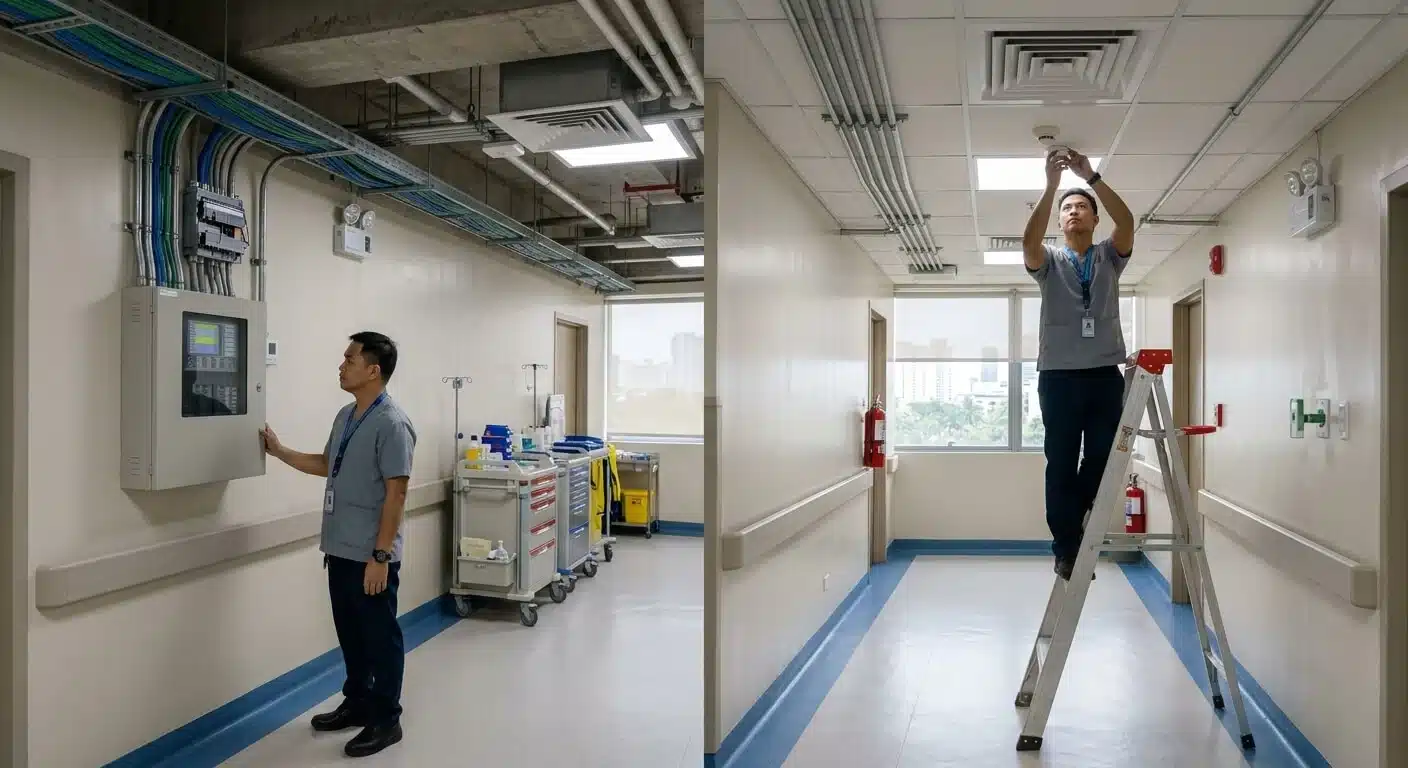
A systematic investigation helps technicians distinguish between environmental influences, device problems, wiring faults, power issues and programming errors. Start with the panel’s event history, investigate the affected area and verify the result after corrective work.
01 / IDENTIFY
Review the Event History
Record the alarm or trouble message, device address, zone, timestamp and frequency of occurrence.
02 / INVESTIGATE
Inspect Site Conditions
Check environmental conditions, device condition, wiring, power and related equipment.
03 / CORRECT
Resolve the Root Cause
Carry out approved cleaning, repair, configuration correction or device replacement as required.
04 / VERIFY
Test and Document
Verify affected devices and required interfaces, record results and identify any outstanding issues.
01 / EVENT HISTORY
Start With the Fire Alarm Panel’s Event Log
The control panel’s event history is a useful starting point when investigating recurring alarms, intermittent faults or repeated device activations. Review the displayed message and available event details before making changes to the system.
Alarm Events
Identify which detector, manual call point, input module or zone initiated the alarm, where the system provides that information.
Trouble and Fault Events
Look for indications involving device communication, circuit wiring, power supplies, batteries, ground faults or other monitored conditions.
Recurring Patterns
Compare event times with cleaning, construction, equipment operation, humidity changes or other activities near the affected area.
Keep the original event details in the service record. Repeatedly resetting the panel without identifying the cause can conceal useful evidence and leave the underlying problem unresolved.
02 / ENVIRONMENT AND DETECTOR SUITABILITY
Check Environmental Conditions and Detector Placement
Unwanted alarms may be associated with conditions near a detector, but the actual cause must be verified. A device that repeatedly activates in one location may be exposed to contamination, airborne particles, moisture or other conditions inconsistent with its intended application.
Dust and Construction Work
Dust from drilling, sanding, renovation or nearby industrial activities can affect suitable detection technologies. Review construction controls and the approved protection plan.
Steam, Aerosols and Moisture
Steam, aerosol sprays, condensation and moisture may contribute to unwanted activations or device faults, depending on detector type and site conditions.
Airflow and Room Use
HVAC airflow, room layout, occupancy and changes in how an area is used can affect detection performance and should be reviewed against the approved design.
Contamination and Insects
Dust accumulation, insects or other contamination may affect certain devices. Cleaning must follow the manufacturer’s approved procedure.
Important: Do not relocate a detector, change its type or alter its sensitivity simply to eliminate nuisance alarms. Confirm that any proposed change is compatible with the approved fire alarm design and applicable requirements.
03 / DEVICES, WIRING AND POWER
Inspect Devices, Circuits and Power Supplies
Not every fire alarm problem is caused by environmental conditions. A recurring activation or trouble signal can also indicate a damaged device, loose termination, wiring issue, communication problem or unreliable power source. Inspection and electrical testing should be performed by qualified personnel using equipment-appropriate procedures.
Detector and Device Condition
Check for visible damage, contamination, loose mounting, incorrect installation or signs that the device needs manufacturer-approved servicing.
Wiring and Circuit Integrity
Where applicable, inspect terminations, circuit continuity, loop communication, short circuits, open circuits, ground faults and module connections.
Power and Batteries
Review the main supply, charger, battery condition and monitored power faults against the system manufacturer’s requirements and maintenance schedule.
Modules and Interfaces
Check relevant input/output modules and monitored interfaces when the event involves connected equipment or a specific programmed response.
A trouble indication should be interpreted according to the actual panel message and manufacturer documentation. Do not assume that every trouble signal means the same thing across different fire alarm platforms.
04 / PROGRAMMING AND SYSTEM INTERFACES
Review Programming and Connected Systems
Configuration issues may arise after device replacement, renovations, system expansion or changes to connected equipment. Compare the installed configuration with the approved cause-and-effect requirements, as-built documentation and manufacturer guidance.
- Verify device addresses, labels, zones and device types against the approved records.
- Review configured delays, dependencies and alarm responses where the approved design permits them.
- Check relevant interfaces to systems such as HVAC controls, access-controlled doors, lifts or monitoring equipment where these are part of the approved design.
- Confirm that any configuration changes are authorized, recorded and tested.
Configuration control: Do not introduce unapproved delays, bypasses or changes to alarm logic as a shortcut. Life-safety interfaces must be assessed and tested in accordance with the approved design and applicable procedures.
05 / CORRECTIVE ACTION
Correct the Cause, Then Retest
Corrective work should address the verified cause rather than only clearing the panel indication. Depending on the findings, work may involve approved device cleaning, repair of wiring or terminations, correction of configuration, replacement of defective components or improvement of environmental controls.
Before Testing
Coordinate with the responsible site representative, follow required impairment procedures and establish controls for affected life-safety functions.
During Testing
Use the correct test method for the device and verify relevant panel indications, notification functions and required interfaces within the approved test scope.
After Testing
Confirm normal operation, restore any authorized test or impairment conditions, notify relevant personnel and record outstanding defects or limitations.
Testing should be coordinated so that occupants and monitoring personnel are not exposed to unnecessary confusion. Where the system is connected to a monitoring station or other building systems, follow the site’s notification and restoration procedures.
06 / PREVENTIVE MAINTENANCE
Reduce Recurring Fire Alarm Problems Through Maintenance
A preventive maintenance program helps identify deterioration and recurring conditions before they lead to repeated alarms or extended system faults. Maintenance frequency and test scope should be based on applicable requirements, manufacturer instructions, system design and site operating conditions.
- Review panel event history and investigate repeated alarms or trouble conditions.
- Inspect and test applicable initiating devices, notification appliances, modules and circuits according to the approved maintenance plan.
- Check batteries, chargers and power supplies as required by the manufacturer.
- Review changes to building layouts, room functions, construction activity and environmental conditions.
- Maintain accurate device lists, test records, service reports and outstanding-defect registers.
Maintenance records make it easier to identify repeated faults, assess whether previous corrective actions worked and plan appropriate follow-up service.
07 / SERVICE REPORTING
What a Fire Alarm Troubleshooting Report Should Include
A clear service report gives the building owner, facility manager and maintenance team a reliable record of the problem, the work performed and the system’s status after service.
- Date, site location and technician or service provider details.
- Reported symptoms, panel messages, device addresses and event timestamps.
- Inspection findings and the identified or suspected root cause.
- Corrective work completed and any parts repaired or replaced.
- Devices and interfaces tested, test results and restoration confirmation.
- Any remaining faults, temporary impairments or limitations requiring follow-up.
- Recommended preventive actions and the responsible party for outstanding work.
08 / RELATED SOLUTIONS
Related Fire Alarm and Maintenance Services
Fire Alarm and Life Safety Systems
Explore fire alarm and life-safety system solutions for building protection and coordinated alarm response.
Preventive Maintenance Services
Plan inspections, testing, maintenance records and corrective actions to support dependable equipment operation.
09 / FREQUENTLY ASKED QUESTIONS
Fire Alarm Troubleshooting FAQs
What causes recurring fire alarm activations?
Possible causes include environmental conditions, contamination, unsuitable detector placement, device faults, wiring problems and configuration issues. The event history and on-site inspection help establish the actual cause.
Should a detector be disabled if it keeps triggering an alarm?
Required detection should not be disabled as a shortcut. Investigate the cause and follow the site’s authorized impairment procedure if protection is affected during corrective work.
Can construction dust cause unwanted fire alarms?
Yes. Dust and airborne particles can affect some detector types. Construction-related protection measures, approved cleaning and detector suitability should be reviewed by qualified personnel.
Why is the fire alarm event log important?
It can show which devices or zones are involved, when events occur and whether alarms or faults repeat under similar conditions. This helps narrow the investigation.
Can a battery or power supply problem cause a fire alarm fault?
Yes. Depending on the system, power supply, charger, battery or related circuit issues may generate trouble indications. Inspection and testing should follow manufacturer requirements.
What should happen after a fire alarm fault is repaired?
The affected equipment and relevant functions should be tested within the approved scope, normal operating status should be confirmed, and the findings and any remaining issues should be documented.
How often should a fire alarm system be maintained?
Maintenance frequency depends on applicable regulations, the system manufacturer’s instructions, the approved maintenance plan and site conditions. The responsible building team should maintain a documented schedule and required test records.
Recurring Alarm or Trouble Condition?
Infinite Systems can help assess supported fire alarm systems, investigate recurring issues and identify corrective and preventive maintenance priorities based on site requirements.