
INFINITE SYSTEMS INSIGHTS:
Layered Security for Critical Facilities
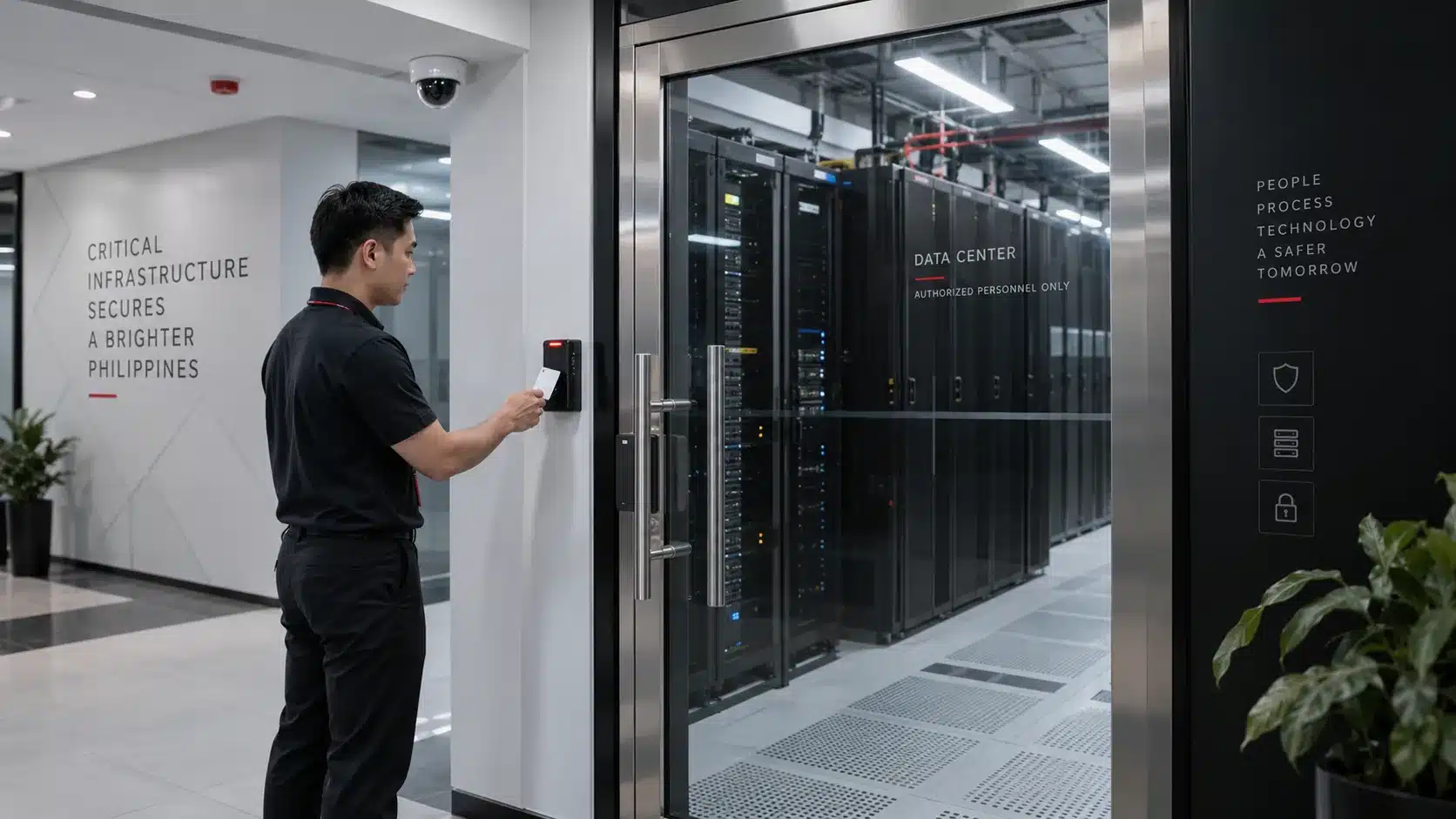
Data centers require more than a card reader at the main entrance. Server rooms, network rooms, operations areas, electrical rooms, loading zones and other critical spaces should be protected according to user identity, role, time, location and operational responsibility. A properly engineered data center access control Philippines solution combines credential management, restricted-area permissions, event records, CCTV verification, visitor workflows and resilient system architecture.
Solution Page
Access Control Systems Philippines
Explore door access, RFID, biometrics, mobile credentials and integrated access control solutions for commercial and critical facilities.
Layered Protection
Why Data Centers Need Layered Access Control
A data center normally contains areas with different levels of operational sensitivity. Security should therefore become more restrictive as a person moves from a public or general building zone toward critical IT infrastructure. This approach is more practical than applying the same credential policy to every door.
Control employee, visitor, vendor and vehicle access before users reach critical areas.
Restrict offices, NOC areas, staging rooms and support spaces according to assigned responsibility.
Apply tighter access permissions for rooms containing racks, network equipment and sensitive systems.
Use stronger authentication where risk assessment and operating policy require it.
Authentication
RFID, Biometrics, Mobile Credentials and Multi-Factor Access
Different data center zones may use different credential technologies. Standard employee areas can use RFID or smart cards, while higher-security areas may require biometric verification, PIN entry, mobile credentials or supported multi-factor combinations. The goal is to match the authentication method to the risk level, user population and operating procedure of each area.
Suitable for centrally managed employee and contractor credentials.
RFID Access Control
Adds identity verification for selected restricted or higher-security areas.
Biometric Access Control
Useful for supported mobile workflows and controlled temporary access.
Mobile and QR Access
Can combine two supported factors for areas where a single credential is not sufficient.
Door Security
Secure the Door, Not Just the Credential
A strong credential policy is ineffective if the physical door is poorly designed. Data center access control should consider the reader, controller, lock, request-to-exit device, door contact, power supply, emergency release requirements and door construction as one system.
Door status monitoring can help identify conditions such as a door held open longer than expected or a forced-open event, depending on the selected platform and system configuration. For higher-risk entrances, anti-passback, interlocking doors or mantrap-style workflows may be considered where they are appropriate to the facility design and life-safety requirements.
Learn more about Door Access Control Philippines
Video Verification
Integrating Access Events with CCTV
Access control records tell security teams which credential was used and when. CCTV can provide visual context around that event. Where supported, access events can be associated with nearby cameras to help operators review denied access, unusual after-hours activity, forced-door events or other incidents.
Camera placement should support identification and incident review without obstructing doors, readers or emergency egress. CCTV retention, image quality and event integration should be designed around the operational and security requirements of the facility. View CCTV and Video Surveillance Systems.
Visitors and Contractors
Temporary Access Should Be Controlled by Time, Area and Purpose
Data centers routinely receive maintenance technicians, equipment vendors, contractors, auditors and other temporary users. Their access should not automatically mirror employee permissions. Temporary credentials can be limited to approved rooms, service windows and expiration times.
Record expected visitors and responsible hosts before arrival.
Issue time-limited card, QR or other supported credentials.
Limit access only to approved service areas.
Automatically or manually disable access when authorization ends.
View Visitor Management Systems
Resilience
Power, Network and Controller Resilience Matter
Data center security systems should be designed for continued operation during normal network interruptions and planned maintenance, according to the capabilities of the selected platform. Controllers, lock power supplies, network switches and management servers should be coordinated with the facility power and network design.
Where required, access controllers can retain local credential and schedule information so authorized access can continue even if communication with the management server is temporarily unavailable. Exact behavior depends on the selected access control architecture and controller configuration.
Infrastructure
Plan Access Control with Structured Cabling and Network Security
Access control is part of the facility’s larger technology infrastructure. Reader cabling, controller locations, network segmentation, fiber or copper uplinks, rack space and pathways should be coordinated early. This is especially important when access control, CCTV and visitor systems share common network infrastructure.
View Structured Cabling Systems
Operations
Access Policies Should Follow Roles and Operational Responsibility
Permissions should be designed around the principle that users receive only the access required for their work. IT administrators, facilities staff, security personnel, tenants, contractors and vendors may require different combinations of rooms, schedules and authentication methods.
Design Checklist
Data Center Access Control Design Checklist
Lifecycle Support
Commissioning and Preventive Maintenance
Commissioning should confirm that readers, locks, door contacts, exit devices, controllers, permissions, schedules, alarms and software functions operate as intended. For integrated systems, CCTV event association and visitor credential workflows should also be tested where included in the project scope.
After turnover, periodic maintenance can help identify degraded batteries, loose terminations, failing locks, damaged readers, communication issues and configuration problems before they become operational failures. View Preventive Maintenance Services.
Integrator Role
Why Work with a Data Center Access Control Integrator?
Data center access control involves more than selecting readers. Door hardware, controllers, credentials, software, power supplies, CCTV, visitor management, network infrastructure and operating procedures must work together. An experienced integrator can coordinate these elements around the facility’s security requirements instead of treating them as isolated devices.
Infinite Systems Technology Corporation designs, supplies, installs, integrates and supports access control systems for commercial, industrial and critical facilities in the Philippines. The final architecture should always be based on site conditions, operational policy, life-safety requirements and the interfaces available from the selected equipment.
Frequently Asked Questions
Data Center Access Control Philippines FAQ
RFID or smart cards are commonly used for regular access, while biometrics, PINs or supported multi-factor combinations may be appropriate for higher-security zones.
Yes. Permissions can be assigned by user, group, door and schedule when supported by the selected system.
Yes, where compatible interfaces are available. Access events can be associated with nearby video to support verification and incident review.
Temporary users should normally receive only the rooms and time windows required for their approved work, with credentials disabled or expired when authorization ends.
Not necessarily. Credential technology should be selected according to risk, convenience, user population, operating procedure and the security classification of each area.
Often yes, but the feasibility depends on existing controllers, readers, locks, cabling, software, network architecture and available interfaces.
Related Solutions
Explore Related Security Solutions
View solution
View solution
View solution
View solution
View solution
View solution
Planning a Critical Facility?
Plan Data Center Access Control Around Your Actual Security Zones
Tell us about your server rooms, restricted areas, users, visitors, credential requirements and existing security infrastructure. Infinite Systems can help assess the facility and develop an access control architecture suited to the project.