
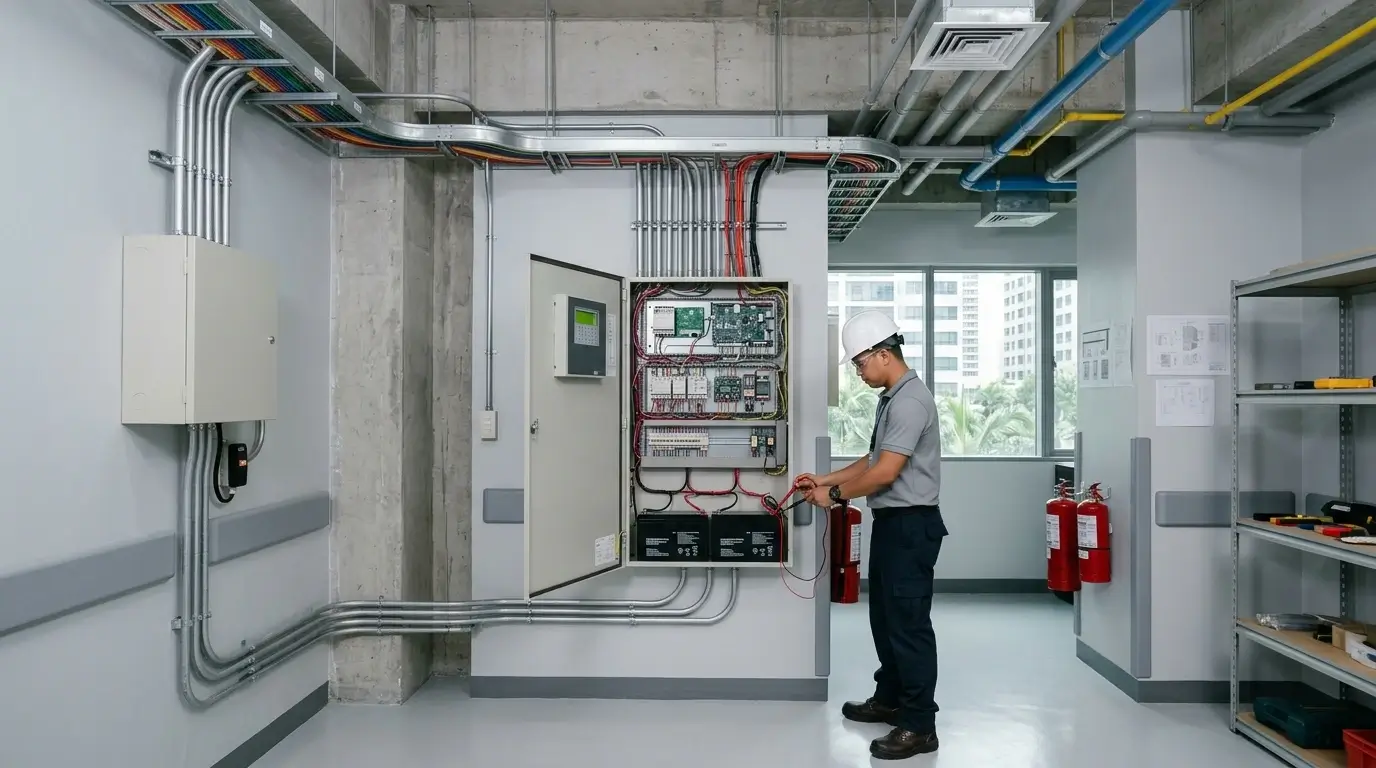
INFINITE SYSTEMS INSIGHTS:
Fire Alarm Battery Maintenance Philippines: Inspection, Testing and Replacement Guide
Fire alarm systems depend on reliable standby power to maintain protection when normal AC power becomes unavailable. Batteries support the fire alarm control panel and associated equipment during power interruptions, helping the system remain operational under its designed standby and alarm conditions. Regular fire alarm battery maintenance is therefore an essential part of life-safety system reliability. It involves more than checking voltage: technicians must inspect physical condition, verify charging performance, assess battery capacity, review operating history and document corrective actions.
PLANNING PRINCIPLE
A healthy-looking battery is not necessarily a reliable battery. Fire alarm standby batteries must be assessed using appropriate inspection and testing procedures, with replacement decisions based on actual condition, system requirements, manufacturer guidance and applicable maintenance criteria.
01 / PHYSICAL CONDITION
Start With a Physical Battery Inspection
A physical inspection is the first step in evaluating fire alarm standby batteries. Before conducting electrical measurements, check the battery enclosure, battery cases, terminals, wiring and surrounding environment for visible signs of deterioration or damage.
Look for swelling, cracks, leakage, corrosion, loose terminal connections, damaged insulation, discoloration and signs of excessive heat. Also check whether the batteries are securely positioned and whether the installed arrangement matches the fire alarm panel’s documentation.
Battery Case
Check for swelling, cracks, leakage, deformation and other visible signs of deterioration.
Terminals and Wiring
Inspect terminal connections, corrosion, cable insulation, polarity and signs of overheating.
Installation Environment
Review enclosure condition, ventilation, temperature exposure and battery mounting arrangements.
Important: Swollen, leaking or visibly damaged batteries require prompt evaluation and appropriate corrective action. Follow suitable battery-handling and electrical safety procedures, and do not continue using visibly damaged batteries without assessment.
02 / ELECTRICAL MEASUREMENTS
Check Battery Voltage and Charger Performance
Voltage measurements provide useful information about battery and charging conditions. During maintenance, measure and record the relevant battery and charger readings using suitable test equipment and procedures specified for the installed system.
However, an apparently normal open-circuit voltage does not automatically establish that a battery can support the required fire alarm load. A battery may show an acceptable voltage while having reduced capacity or poor performance under operating conditions.
What Should Be Checked?
- Battery voltage using the appropriate measurement procedure.
- Charging voltage and charger operating condition.
- Terminal connections, polarity and wiring condition.
- Panel or power-supply indications related to battery or charger faults.
- Measured values compared with the manufacturer’s specifications and maintenance criteria.
Record the readings together with the inspection findings and battery history. Measurements should be interpreted in context rather than evaluated using a single voltage reading or a generic threshold that may not apply to the installed equipment.
03 / STANDBY PERFORMANCE
Verify Standby Battery Performance
The purpose of standby batteries is to support the fire alarm system when normal AC power is unavailable. For this reason, maintenance should consider whether the battery arrangement can provide the required standby and alarm operation, not simply whether the batteries appear charged.
Performance testing methods depend on the fire alarm panel, battery type, system configuration and approved maintenance procedure. Where a controlled load test or another approved assessment method is required, use suitable equipment and follow the manufacturer’s instructions.
Key Considerations During Testing
- Confirm the approved testing procedure for the installed equipment.
- Understand which fire alarm functions may be affected by the test.
- Coordinate with responsible facility personnel before testing.
- Maintain appropriate fire protection arrangements while testing is performed.
- Record test conditions, results, limitations and corrective actions.
Testing should never create an unintended loss of fire protection. Do not disconnect normal power or deliberately discharge standby batteries without an approved procedure and the necessary operational safeguards.
04 / BATTERY CAPACITY
Review Fire Alarm Battery Capacity Requirements
Battery capacity must be suitable for the connected fire alarm system and its required operating duration. The battery calculation should account for the standby load and the alarm load under the applicable design criteria.
Changes to the system can affect the original power requirements. Adding notification appliances, field devices, modules or other equipment may increase current demand and require the battery calculation to be reviewed.
Factors That Influence Battery Sizing
Standby Load
The current required to support the system during its specified standby period.
Alarm Load
The additional demand from connected equipment during the required alarm condition.
System Configuration
Connected devices, notification loads, power supplies and manufacturer requirements.
Battery capacity should be verified against the actual system design and applicable requirements. Do not assume that the original battery size remains adequate after system expansion or modification. Update the supporting calculation and documentation whenever relevant changes are made.
05 / BATTERY SERVICE LIFE
Consider Battery Age and Operating Environment
Fire alarm standby battery performance can deteriorate over time. Actual service life depends on several factors, including battery chemistry, operating temperature, charging conditions, discharge history, installation environment and product quality.
High temperatures and unsuitable charging conditions can contribute to faster deterioration. Battery age should therefore be considered together with physical condition, electrical measurements, test results and maintenance history.
Maintenance Records Worth Reviewing
- Original installation or replacement date, where available.
- Previous inspection and testing results.
- History of battery or charger-related faults.
- Environmental conditions and unusual heat exposure.
- Previous corrective actions and replacement recommendations.
Use the battery manufacturer’s recommended service-life guidance as part of the maintenance plan. Do not wait for a complete battery failure before evaluating a battery that shows signs of deterioration or repeatedly fails the required checks.
06 / BATTERY REPLACEMENT
Replace Batteries According to Manufacturer Requirements
When a battery no longer meets the required performance criteria, replacement should be planned using the battery specifications approved for the installed fire alarm equipment.
Where two batteries operate together in a series or matched arrangement, follow the panel and battery manufacturer’s instructions for replacement. Do not mix unsuitable battery types, capacities, ages or operating conditions.
Replacement reminder: Verify battery voltage, capacity, chemistry, dimensions, terminal arrangement and equipment compatibility before installation. Follow the required handling, connection, polarity and commissioning procedures.
After replacement, verify the charging arrangement, inspect the connections and confirm that the panel reports the expected normal condition. Record the new battery details and replacement date in the maintenance documentation.
07 / MAINTENANCE DOCUMENTATION
Document Every Inspection and Test
Consistent maintenance records help establish the condition and service history of fire alarm standby batteries. They also make it easier to identify recurring faults, compare measurements and plan replacement before battery deterioration affects system reliability.
Recommended Maintenance Record Details
- Fire alarm control panel or power-supply identification.
- Battery manufacturer, model, type and capacity.
- Installation or replacement date, where known.
- Physical inspection findings and environmental observations.
- Measured battery and charger values.
- Testing method, conditions and recorded results.
- Fault indications, corrective actions and replacement recommendations.
- Final system condition and technician or service-provider details.
A complete record should show not only what was inspected but also what was measured, what corrective action was taken and whether the system was returned to its expected operating condition.
08 / FIELD CHECKLIST
Fire Alarm Battery Maintenance Checklist
Use this checklist as a practical reference during scheduled inspections and preventive maintenance. The actual scope and testing frequency should follow the applicable requirements and the manufacturer’s guidance for the installed system.
INSPECT
- Battery case and physical condition
- Terminals and cable connections
- Corrosion, swelling or leakage
- Enclosure and installation environment
- Battery arrangement and identification
TEST
- Battery voltage and charger condition
- Relevant panel fault indications
- Approved battery performance checks
- System operation after maintenance
- Required corrective actions
RECORD
- Battery details and installation date
- Measured values and test results
- Battery condition and service history
- Replacement and corrective actions
- Final system status and handover
09 / RELATED SOLUTIONS
Related Infinite Systems Solutions
Fire alarm battery maintenance is one part of a broader life-safety system maintenance program. Reliable standby power, properly functioning field devices and periodic system inspections all contribute to dependable fire detection and alarm operation.
Fire Alarm and Life Safety Systems
Explore fire detection, alarm control equipment and life-safety system solutions for building protection.
Preventive Maintenance Services
Support planned inspections, equipment checks and maintenance activities to help maintain system reliability.
10 / FREQUENTLY ASKED QUESTIONS
Fire Alarm Battery Maintenance FAQs
Is voltage alone enough to determine fire alarm battery condition?
No. Voltage is one useful measurement, but it does not independently confirm battery capacity or its ability to support the required load. Physical inspection and appropriate performance-testing procedures should also be considered.
How often should fire alarm batteries be inspected and tested?
The required frequency depends on applicable maintenance requirements, project specifications, manufacturer guidance and the installed system. Follow the approved maintenance schedule rather than relying on a generic interval.
Should swollen or leaking batteries remain in service?
Swelling, leakage and other visible damage are signs that require prompt evaluation and appropriate corrective action. Follow safe handling procedures and the manufacturer’s recommendations.
Can different battery sizes or capacities be mixed?
Only use battery types and capacities approved for the installed equipment. For batteries operating in a series or matched arrangement, follow the manufacturer’s replacement instructions and compatibility requirements.
Does adding fire alarm devices affect battery capacity requirements?
Yes. Additional devices and notification loads can increase the system’s standby or alarm current demand. Review the power and battery calculations whenever changes affect the connected load.
Why should fire alarm battery test results be documented?
Records establish maintenance history, help identify deterioration and recurring faults, and support informed replacement decisions. They also provide evidence of the inspection and corrective work performed.
Can battery testing interrupt fire alarm protection?
It can, depending on the testing method and system configuration. Testing should follow an approved procedure with appropriate coordination and safeguards to avoid an unintended loss of fire protection.
MAINTAIN YOUR LIFE-SAFETY SYSTEM
Need Fire Alarm Preventive Maintenance?
Infinite Systems can help assess and maintain fire alarm and life-safety systems for commercial, industrial and institutional facilities in the Philippines. Maintenance activities may include control equipment inspection, field device checks, power-supply assessment, standby battery inspection and system performance verification, depending on the installed equipment and approved scope of work.