
INFINITE SYSTEMS INSIGHTS
Entrance Screening Checkpoint Planning: Metal Detectors, Baggage Scanners, CCTV and Access Control
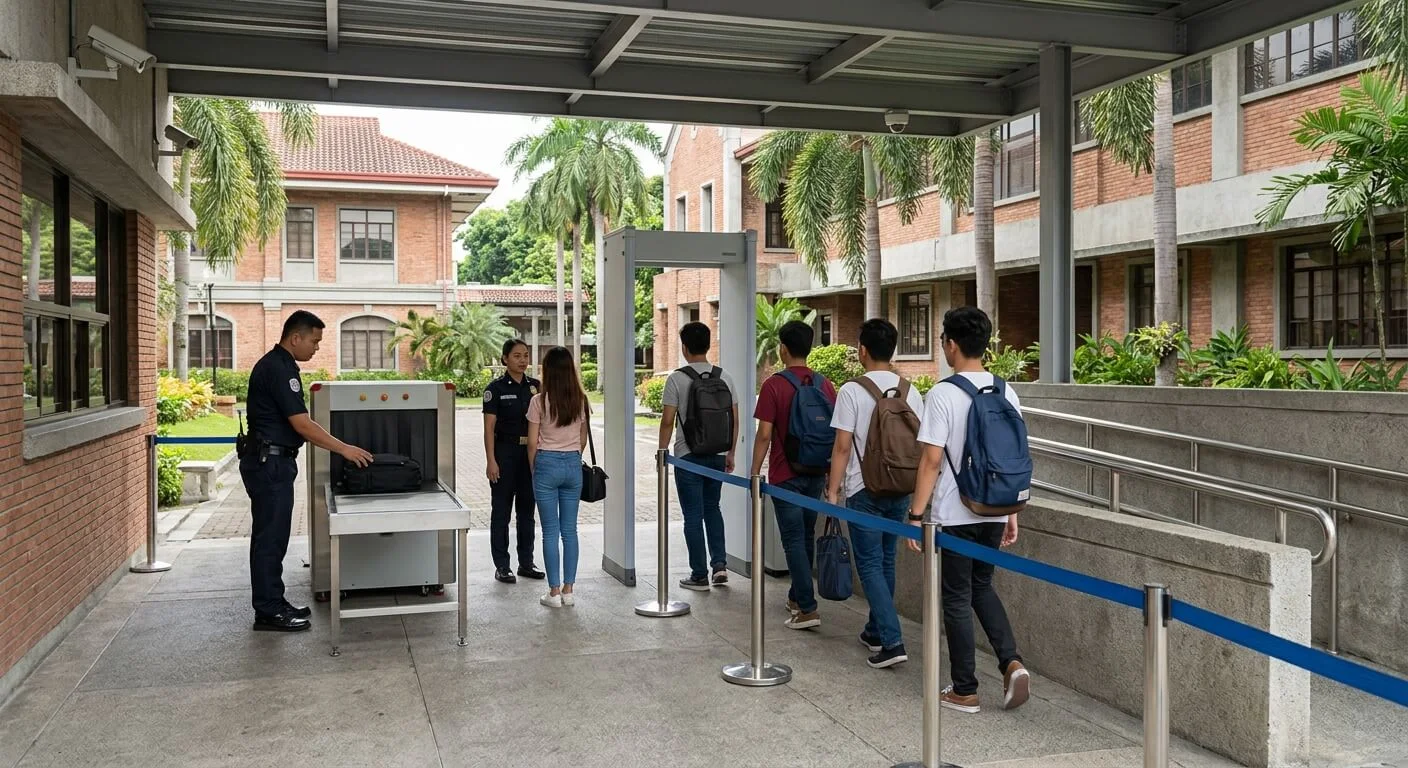
A screening checkpoint is a workflow, not a collection of devices. Metal detectors, baggage scanners, CCTV, visitor registration and access control only improve entrance security when people are directed through a controlled route and security personnel know what to do when an alarm, prohibited item or other exception requires secondary action.
PLANNING PRINCIPLE
Design the checkpoint around the required security workflow first, then select and position the equipment needed to support it. Throughput, screening procedures, secondary inspection, accessibility, emergency egress, operator visibility and future expansion should be considered before finalizing the layout.
01 / PROJECT CONTEXT
Define Who and What Must Be Screened
Start with the site’s risk assessment, operating policy and expected entrance activity. Employees, students, visitors, contractors and delivery personnel may require different procedures or access permissions.
Identify peak arrival periods, expected bag volumes, accessible routes, restricted entrances, queue areas and the point at which an entrant becomes authorized to proceed. These requirements help determine the checkpoint layout and equipment capacity.
CONTROL
Establish the intended entrance lane and reduce uncontrolled bypass routes.
SCREEN
Inspect people and carried items using the site’s approved screening procedure.
RESPOND
Move alarms and exceptions into a defined secondary screening process.
AUTHORIZE
Allow onward movement only after the required screening and access procedure is completed.
02 / PEOPLE SCREENING
Walk-Through Metal Detector Placement
Position the walk-through metal detector in a controlled pedestrian lane with enough clearance for approach, passage and alarm handling. The surrounding environment should be reviewed during the site assessment because nearby metal structures, electrical equipment and other environmental conditions may affect installation and operation.
The checkpoint should also provide enough space for security personnel to manage alarms without blocking the primary pedestrian route. The layout must not create an unsafe obstruction to required emergency egress.
APPROACH
Provide a clear approach path so entrants understand where to proceed before reaching the detector.
DETECTION
Position the detector within the controlled screening lane and follow the manufacturer’s installation requirements.
ALARM HANDLING
Provide space for an alarmed person to move aside without stopping the main screening flow.
03 / BAGGAGE SCREENING
Plan the Baggage Scanner Workflow
An X-ray baggage scanner requires space for loading, conveyor travel, operator viewing and bag retrieval. The surrounding queue layout should prevent unscreened bags from bypassing the scanner or becoming mixed with screened items.
The operator should also have a defined procedure for images or items that require additional inspection according to the site’s security policy. The secondary inspection area should be positioned so that exceptions can be handled without unnecessarily stopping the primary flow.
LOAD
Provide a clear and controlled location for placing bags onto the conveyor.
SCREEN
Give the operator an appropriate viewing position and working area.
RETRIEVE
Provide a defined location where screened bags can be collected without obstructing the lane.
SECONDARY
Provide a controlled area for items requiring additional inspection according to site policy.
04 / VIDEO SURVEILLANCE
Design CCTV Coverage Around the Checkpoint
CCTV should provide useful views of the approach, screening lane, baggage scanner, operator position and secondary screening area. A single wide camera view may not provide enough detail for incident review or operational verification.
Camera placement should support security operations while respecting applicable privacy and operational requirements. Lighting conditions, camera height, viewing angles, recording requirements and network connectivity should be considered during design.
APPROACH VIEW
Capture useful visibility of people approaching the checkpoint.
SCREENING VIEW
Provide visibility of the primary screening activity.
OPERATOR VIEW
Support review of operator and equipment activity where appropriate.
SECONDARY AREA
Provide appropriate coverage of the area used for alarm or exception handling.
05 / ACCESS CONTROL
Coordinate Visitor Management and Access Control
For controlled facilities, screening can be coordinated with visitor registration and temporary access. A visitor may check in, complete the required screening process and then receive only the access permissions needed for the approved visit.
The exact integration capability depends on the selected platforms. During design, define which system owns visitor records, credentials, access permissions and screening status, and identify where manual security intervention is required.
REGISTER
Capture the visitor information required by the site’s approved registration process.
SCREEN
Complete the required people and baggage screening procedure.
AUTHORIZE
Issue the appropriate temporary credential or access permission after required checks.
TRACK
Maintain appropriate records of visitor movement and access activity according to site policy.
INTEGRATION NOTE
Do not assume that different security platforms automatically share screening or visitor information. Confirm supported interfaces, data exchange, permissions and responsibility for each system during design.
06 / THROUGHPUT
Design for Peak Arrival Periods
A checkpoint that works during normal traffic can still fail operationally during school arrival, employee shift changes, events or other peak periods. Estimate expected people and baggage throughput before deciding the number and arrangement of screening lanes.
PEOPLE FLOW
Estimate the number of people arriving within the peak operating period.
BAG VOLUME
Estimate baggage volume and the expected scanner processing demand.
ALARM RATE
Allow for people or bags requiring additional attention without stopping the primary lane.
QUEUE SPACE
Provide adequate space for waiting people while maintaining controlled movement.
07 / FACILITY PLANNING
Checkpoint Planning Checklist
FLOW & ACCESS
- Expected people throughput
- Expected baggage volume
- Queue length
- Bypass prevention
SCREENING
- Metal detector position
- Baggage scanner position
- Secondary screening area
- Operator positions
INFRASTRUCTURE
- Power outlets
- Network outlets
- Cabling routes
- Equipment service access
SAFETY & ACCESSIBILITY
- Accessible route
- Emergency egress
- Weather protection
- Safe pedestrian circulation
SYSTEMS
- CCTV coverage
- Visitor management
- Access control
- Recording requirements
OPERATIONS
- Guard procedures
- Alarm response
- Operator training
- Maintenance access
08 / PROJECT WORKFLOW
A Practical Entrance Screening Design Workflow
01 / ASSESS
Review site risks, entrance users, peak periods, existing procedures and physical constraints.
02 / PLAN
Define screening lanes, queue areas, secondary screening, accessible routes and operator positions.
03 / INTEGRATE
Coordinate metal detection, baggage screening, CCTV, visitor management and access control.
04 / IMPLEMENT
Install equipment, cabling, network infrastructure and supporting entrance controls.
05 / COMMISSION
Test equipment operation, security workflows, alarm handling, recording and access procedures.
DOCUMENTATION NOTE
The final project documentation should identify equipment locations, system interfaces, network and power requirements, operating procedures, alarm-response procedures, maintenance requirements and relevant training or turnover records.
09 / RELATED SOLUTIONS
Related Infinite Systems Solutions
Support entrance monitoring, incident review and security operations with coordinated video surveillance.
Coordinate visitor registration, temporary credentials and controlled visitor workflows.
10 / FAQ
Frequently Asked Questions
Should the metal detector come before access control?
The correct sequence depends on the site’s security policy and physical layout. The workflow should ensure the required screening occurs before an entrant reaches areas where cleared or authorized access is required.
Can baggage scanning and visitor registration share one entrance?
Yes, provided the layout clearly separates registration, screening, exception handling and authorized onward movement. The final arrangement should be based on expected traffic and the site’s operating procedures.
How can we avoid long queues at the checkpoint?
Estimate peak throughput, provide appropriate screening capacity and move alarm or exception handling away from the primary lane whenever the site layout permits.
Should CCTV cover the screening checkpoint?
Yes. Properly positioned cameras can support security operations, incident review and verification of entrance activity, subject to applicable privacy and operational requirements.
Why is a secondary screening area important?
It allows alarms or exceptions to be handled without unnecessarily stopping the primary screening lane. This can help maintain throughput while giving security personnel a defined area for additional procedures.
What should be considered before installing screening equipment?
Review people and baggage throughput, entrance layout, queue space, power and network requirements, operator positions, accessibility, emergency egress, secondary screening, CCTV coverage and the site’s security procedures.
Planning an entrance screening checkpoint?
Infinite Systems can help coordinate screening equipment, CCTV, visitor management, access control, structured cabling, network requirements and entrance security workflows based on the site’s operational requirements.