
INFINITE SYSTEMS INSIGHTS:
Parking Barrier Preventive Maintenance: What Should Be Checked?
Learn what parking barrier preventive maintenance should check across boom mechanics, safety detection, RFID or LPR, power, networking, lane controls and system logs.
ENGINEERING NOTE
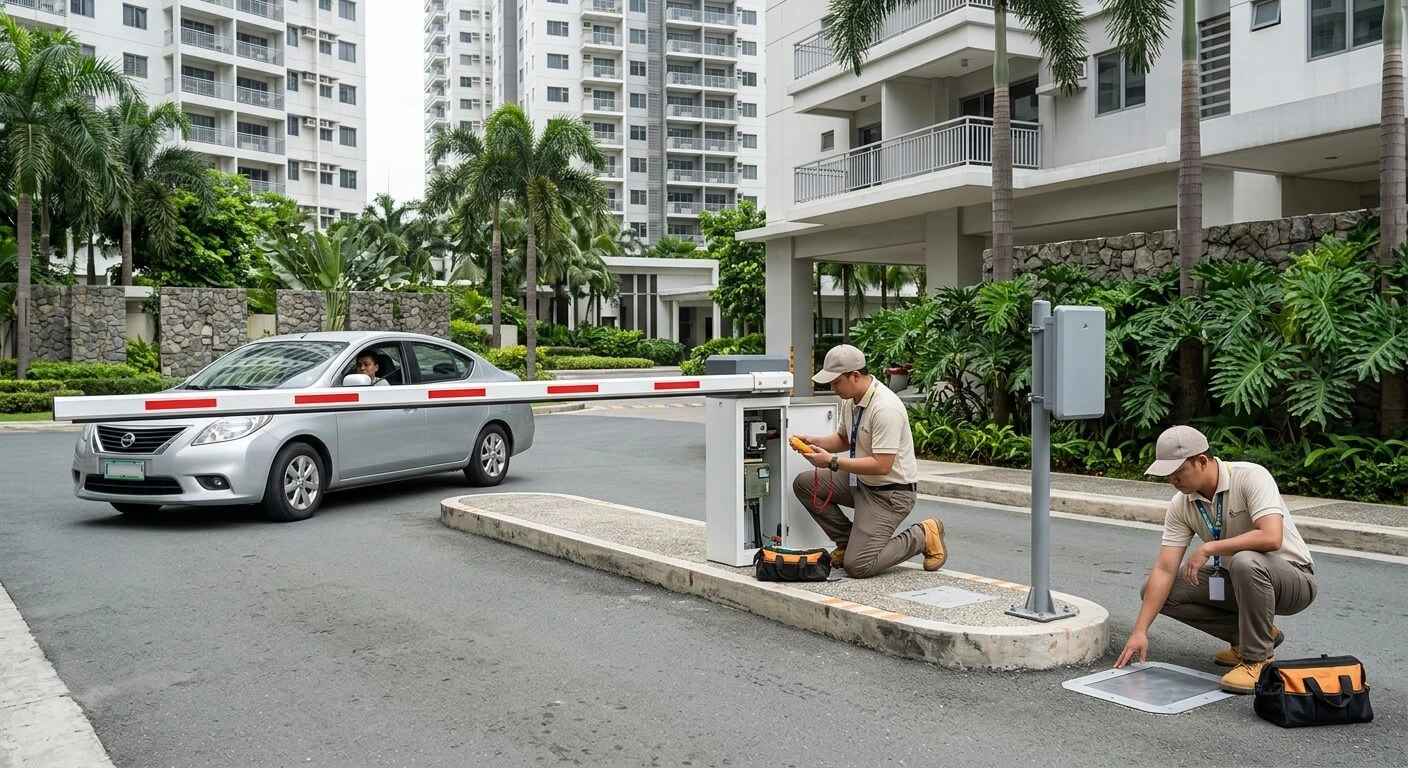
Preventive maintenance should evaluate the complete vehicle-access lane, not only the boom barrier.
The correct scope depends on the installed equipment, site conditions, operating requirements and applicable project criteria. Verify field conditions before finalizing a BOQ, service scope or maintenance procedure.
01 / INSPECT
Mechanical Condition
Check the cabinet, boom arm, mounting, alignment, moving components and signs of wear or impact.
02 / VERIFY
Safety & Detection
Verify loops, photocells and other vehicle-detection devices operate correctly within the lane.
03 / TEST
Authorization & Controls
Test RFID, LPR, QR or other authorization workflows together with lane controls and interfaces.
04 / REPORT
Findings & Corrective Work
Document defects, recurring faults, parts requirements, unresolved issues and recommended corrective action.
01 / MAINTENANCE SCOPE
Why Parking Barrier Maintenance Must Cover the Whole Lane
A boom barrier is only one part of a vehicle-access system. Reliable operation also depends on mechanical alignment, safety detection, vehicle authorization, traffic indicators, power, networking and software or lane-control logic where installed.
A maintenance visit that focuses only on lubrication or boom-arm movement can miss the actual cause of intermittent lane failures. For this reason, a useful parking barrier preventive maintenance scope should consider the complete operating sequence from vehicle detection and authorization through barrier movement, passage confirmation and transaction or event recording.
Maintenance principle
Test the lane as an operating system, not just the individual barrier hardware. This helps identify faults that may occur between mechanical, electrical, detection and access-control components.
02 / MECHANICAL CONDITION
Boom Barrier and Physical Inspection
Mechanical condition directly affects barrier reliability, operating speed and safe movement. Inspection should identify wear, alignment problems, impact damage and environmental conditions that may contribute to premature failure.
Cabinet & Mounting
Inspect cabinet condition, mounting points, foundation or base condition, fasteners, signs of impact and water ingress.
Boom & Movement
Check boom alignment, movement, stopping position, unusual noise and mechanical wear during representative operation.
Balancing & Components
Where applicable, inspect springs, balancing mechanisms, linkages and other moving components according to the equipment design.
The barrier should travel smoothly and stop correctly without abnormal movement. Any adjustment or replacement should follow the equipment manufacturer’s requirements and the approved maintenance procedure.
03 / SAFETY DETECTION
Vehicle Detection and Safety Devices
Vehicle detection is an important part of barrier-lane operation. Depending on the system, this may include inductive loop detectors, photocells or other presence and safety devices.
These devices should be checked under representative operating conditions. The maintenance scope should confirm that detection zones remain appropriate for the lane and that the barrier responds according to the approved control logic.
Conditions worth checking
- Loop or vehicle-presence detection
- Photocell or optical safety devices
- Detection-zone alignment
- Cable condition and connections
- Changes caused by resurfacing or lane modifications
- Barrier response during representative vehicle conditions
A failed or poorly positioned detector can cause unreliable operation. Safety-related testing should be performed using the approved procedure and with appropriate control of the lane during service.
04 / AUTHORIZATION SYSTEMS
RFID, LPR, QR and Vehicle Authorization
Parking barriers are often integrated with vehicle-identification or access-control technologies. Preventive maintenance should therefore include the authorization equipment when it forms part of the operating lane.
RFID
Reader & Tag Performance
Inspect reader mounting, cabling, configuration and practical tag-read performance. Where appropriate, check for cross-lane or inconsistent reads.
LPR
Camera & Plate Capture
Review camera position, focus, cleanliness, lighting conditions and actual plate-capture performance under representative traffic conditions.
QR / ACCESS
Authorization Workflow
Where installed, test representative authorized, unauthorized and exception scenarios rather than validating only one successful transaction.
Testing the complete authorization workflow helps distinguish mechanical barrier faults from problems involving readers, cameras, credentials, communication or system logic.
05 / POWER & NETWORK
Power, Communication and System Logs
Intermittent parking-lane problems can originate outside the barrier itself. Power supplies, protection devices, network connections and communication equipment should therefore form part of the maintenance assessment where applicable.
Power
Inspect relevant power supplies, connections, protection and equipment condition according to the installed system.
Network
Check communication connectivity between lane equipment, controllers, readers, cameras and central systems where applicable.
Logs
Review transaction, event or fault logs where available to identify recurring communication failures or intermittent equipment behavior.
06 / LANE CONTROLS
Traffic Indicators, Intercom and Lane Interfaces
Parking facilities may include additional lane equipment such as red and green traffic indicators, intercoms, loop controls, ticketing equipment or other access interfaces. These components should be included when they form part of the approved lane configuration.
Maintenance should verify that the equipment responds correctly to normal and exception conditions. For example, a successful authorization should result in the expected lane sequence, while an unauthorized or exception condition should follow the configured workflow.
Test the operating sequence
Vehicle detection → authorization → barrier command → barrier movement → vehicle passage → lane reset → transaction or event record.
Testing the sequence as a complete workflow can reveal faults that may not appear when individual devices are tested separately.
07 / MAINTENANCE WORKFLOW
A Practical Parking Barrier Maintenance Process
01 / REVIEW
Understand the Lane
Review equipment, previous service reports, known faults, lane configuration and operating requirements.
02 / INSPECT
Check Physical Condition
Inspect mechanical, electrical and environmental conditions before functional testing.
03 / VERIFY
Test Components
Verify detection, authorization, barrier movement, lane controls, communication and relevant interfaces.
04 / REPORT
Document & Correct
Record findings, identify corrective requirements and document unresolved issues for follow-up.
08 / SERVICE REPORT
Parking Barrier Maintenance Checklist
A useful service report should provide enough information for the facility team to understand what was checked, what was found and what action may be required.
- Barrier cabinet and physical condition
- Boom arm alignment and movement
- Mechanical components and balancing system
- Mounting bolts and equipment foundation
- Loop or vehicle-presence detection
- Photocells and safety devices
- RFID, LPR or QR authorization
- Traffic indicators or intercom where installed
- Power supply and relevant protection
- Network and communication status
- Lane exception workflows
- Transaction or fault history
- Parts requiring replacement
- Unresolved defects and corrective recommendations
09 / MAINTENANCE FREQUENCY
How Often Should Parking Barriers Be Maintained?
There is no single maintenance interval that applies to every parking barrier installation. The appropriate frequency depends on equipment requirements, traffic volume, environmental conditions, operating hours, site importance and the manufacturer’s maintenance recommendations.
High-volume parking facilities may require closer service attention because frequent operating cycles can increase mechanical wear and expose intermittent detection or communication problems more quickly.
Maintenance planning should consider:
- Daily or continuous operating cycles
- Traffic volume and lane usage
- Outdoor exposure and environmental conditions
- Manufacturer maintenance requirements
- Previous faults and recurring service issues
- Operational importance of the parking facility
10 / RELATED SOLUTIONS
Related Infinite Systems Solutions
Parking Barrier Systems
Vehicle access solutions designed around controlled parking entry and exit requirements.
Preventive Maintenance Services
Planned maintenance support for installed security and building technology systems.
Access Control Systems
Integrated access-control solutions for facilities requiring controlled entry and authorization.
11 / FREQUENTLY ASKED QUESTIONS
Parking Barrier Preventive Maintenance FAQs
How often should parking barriers be maintained?
Frequency depends on traffic cycles, environmental conditions, equipment requirements and the manufacturer’s recommendations. High-volume lanes may justify closer service attention.
Does parking barrier maintenance include RFID?
It should where RFID forms part of the operating lane. The scope can include reader mounting, connections, communication and practical read testing under representative conditions.
Should LPR cameras be checked during maintenance?
Yes, where LPR forms part of the lane. Camera angle, focus, cleanliness, lighting and actual license-plate capture can affect authorization performance.
Why should loop detectors be tested?
Loop detectors can form part of vehicle presence and safety logic. A failed, damaged or poorly positioned detector can contribute to unreliable lane operation.
Can preventive maintenance reduce parking barrier downtime?
Regular inspection can identify mechanical wear, alignment problems, detection faults and communication issues before they develop into more disruptive failures.
What should a parking barrier maintenance report show?
The report should identify the equipment and lanes checked, tests performed, defects found, corrective recommendations, parts required and unresolved issues requiring follow-up.
Should the complete lane be tested instead of only the barrier?
Yes. Where the equipment is integrated, testing the complete operating sequence can help identify faults between vehicle detection, authorization, barrier control, communication and transaction systems.
TALK TO OUR ENGINEERING TEAM
Need a Site-Specific Assessment?
Infinite Systems can assess your existing parking and vehicle-access infrastructure, define the technical maintenance scope and recommend practical implementation or maintenance priorities for your Philippine facility.