
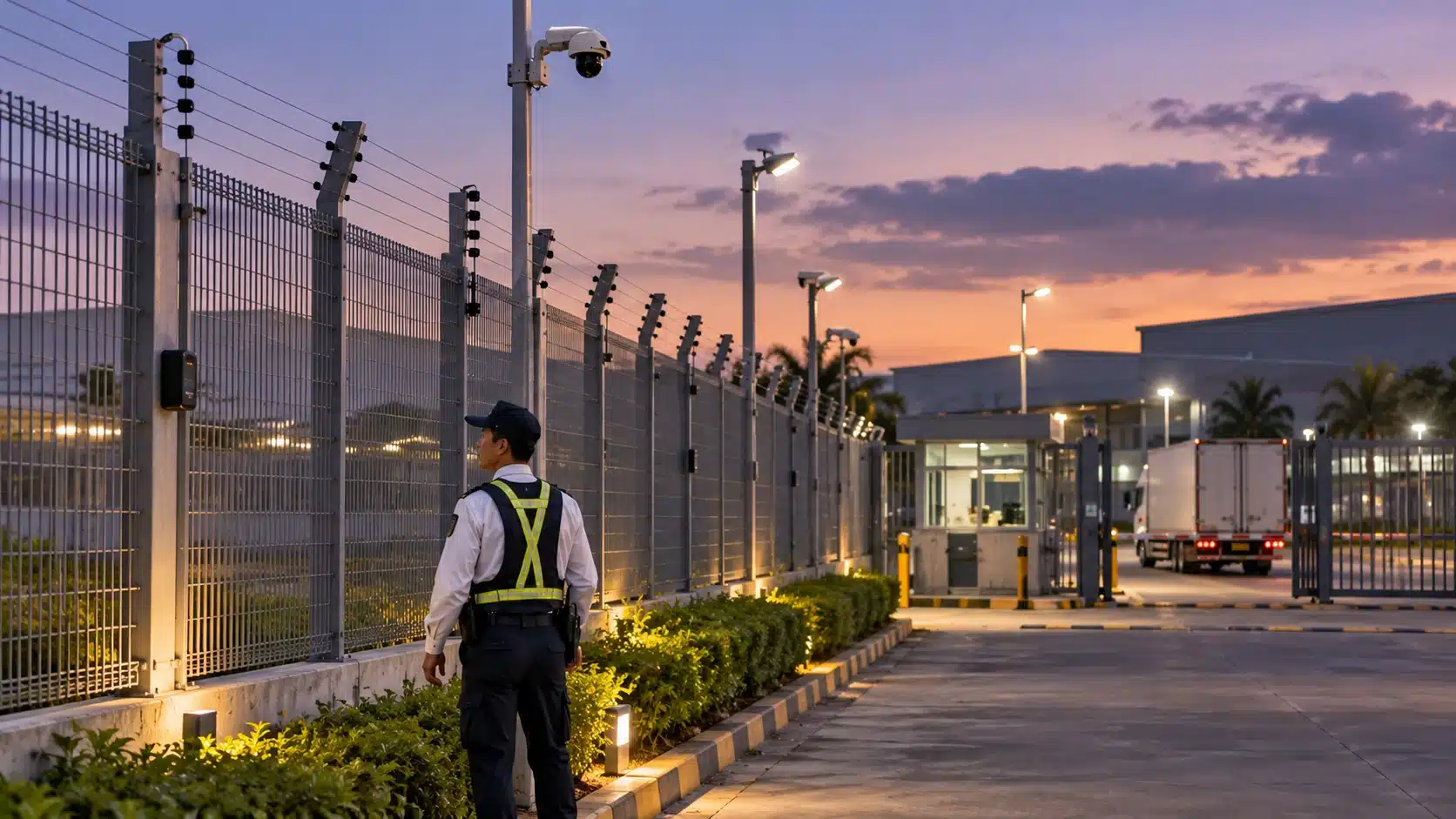
Perimeter Intrusion Detection Systems for Industrial and High-Security Facilities
A perimeter fence can delay unauthorized entry, but a fence by itself does not tell security personnel when someone is climbing, cutting, forcing, or crossing the boundary. A perimeter intrusion detection system (PIDS) adds electronic detection and alarm logic to the outer security layer.
For factories, utility compounds, warehouses, data centers, logistics yards, transport facilities, and other higher-risk sites in the Philippines, the practical objective is not simply to generate an alarm. The system should help security personnel determine where an event occurred, verify what is happening, and respond according to site procedures.
Effective perimeter security therefore combines detection technology with CCTV, physical barriers, controlled gates, lighting, communications, alarm zoning, and trained response personnel.
Layered Perimeter Security and Video Verification
Infinite Systems can help assess perimeter boundaries, fence conditions, gates, camera coverage, detection zones, lighting, access points, network infrastructure, and response workflows when developing a perimeter security solution.
Perimeter Activity
CCTV Visibility
Physical Boundaries
Alarm Workflow
What Is a Perimeter Intrusion Detection System?
A perimeter intrusion detection system, commonly called PIDS, uses sensors, video analytics, or a combination of detection technologies to identify activity along a fence line, wall, gate, open boundary, or restricted outdoor area.
Important: PIDS is a detection layer. It does not replace physical barriers, CCTV verification, security personnel, or established response procedures.
Common Perimeter Intrusion Detection Technologies
The appropriate technology depends on the fence construction, terrain, boundary length, environmental conditions, expected intrusion method, detection zone, maintenance requirements, and project objectives.
Why CCTV Verification Matters
Outdoor detection systems operate in environments where weather, vegetation, animals, maintenance activity, lighting changes, and nearby movement can affect alarm conditions. CCTV provides visual context that can help an operator determine what is happening before escalating a response.
Integrate Detection with Physical Security
A perimeter security system becomes more useful when each security layer has a defined purpose. Fencing and walls provide physical delay, detection systems identify possible intrusion, CCTV provides verification, controlled gates manage authorized movement, and security personnel follow the response procedure.
For high-security pedestrian entry points, additional physical controls may also be appropriate depending on the facility and operating requirements.
Design Practical Alarm Zones Along Long Boundaries
Long fence lines should not be treated as one large undifferentiated alarm area. Practical zoning allows operators to identify where an event occurred and associate the alarm with the appropriate camera view, response procedure, and physical location.
The final number and size of zones should be based on the perimeter layout, detection technology, camera coverage, operator workflow, and response requirements.
How to Reduce Nuisance Perimeter Alarms
No outdoor detection technology should be selected or configured without considering the physical environment. Good engineering, commissioning, maintenance, and operator procedures are important to keep nuisance alarms manageable.
Recurring alarms should be reviewed rather than simply ignored. Patterns may indicate a zone, sensor, environmental condition, or operating procedure that needs adjustment.
Where Perimeter Intrusion Detection Is Used
PIDS is particularly useful where the outer boundary is long, remote, difficult to observe continuously, or protecting critical assets and restricted areas.
Perimeter Detection Requires Site-Specific Design
A perimeter detection system should not be designed from equipment specifications alone. The physical boundary, terrain, fence construction, vegetation, lighting, weather exposure, power availability, network infrastructure, camera positions, security-post locations, and response times all affect the final design.
Planning a Perimeter Intrusion Detection System
Survey
Assess
Design
Install
Test
Maintain
Perimeter Detection Systems Need Routine Maintenance
Perimeter systems operate outdoors and should be inspected periodically. Fence conditions, sensor mounting, cabling, field devices, cameras, vegetation, power supplies, communications, alarm zones, and configuration settings can change over time.
Regular testing can help identify developing faults and confirm that detection, video verification, alarm reporting, and response workflows continue to operate as intended.
Perimeter Intrusion Detection System – Frequently Asked Questions
Does a perimeter intrusion detection system replace security guards?
No. PIDS improves detection and situational awareness, but response still depends on security personnel, operating procedures, communications, and site policy.
Can CCTV analytics be used as perimeter detection?
Yes, where camera placement, lighting, scene conditions, analytics capability, and operating requirements support the intended detection function.
What causes nuisance perimeter alarms?
Vegetation, animals, weather, fence movement, nearby activity, maintenance work, unsuitable sensitivity settings, and poor zone design can contribute to nuisance alarms.
Can perimeter alarms integrate with CCTV?
Yes. Where the platforms support integration, an intrusion event can be associated with selected camera views, recordings, or operator actions.
Can PIDS integrate with access control?
Yes, where supported. A coordinated security architecture can correlate perimeter events with gate status, access records, and associated camera views.
Is one detection technology suitable for every perimeter?
Not necessarily. Fence construction, terrain, boundary length, environmental conditions, lighting, expected intrusion methods, and operational requirements should be considered before selecting the technology.
Build Perimeter Security as a Layered System
Planning a Perimeter Intrusion Detection System?
Tell us about your fence line, gates, boundary conditions, protected assets, camera coverage, lighting, detection requirements, alarm zones, network infrastructure, and response workflow. Infinite Systems can help assess the appropriate layered perimeter-security approach.