
INFINITE SYSTEMS INSIGHTS
An automatic boom barrier controls a vehicle lane by raising only after an approved command from a guard, RFID reader, license plate recognition system, visitor workflow or other supported access method. For Philippine properties, reliable operation depends on more than the barrier arm: lane geometry, traffic volume, vehicle detection, safety devices, power, cabling and access-control logic all need to work together.
What Is an Automatic Boom Barrier?
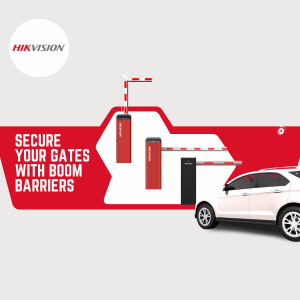
An automatic boom barrier, also called a boom gate or parking gate barrier, uses a motorized operator and horizontal arm to regulate vehicle entry or exit. The barrier receives an opening command from a connected control device or system and returns to the closed position according to the configured operating and safety logic.
A standard parking boom barrier is intended for routine vehicle access and traffic control. It should not automatically be treated as a crash-rated vehicle security barrier. Sites requiring hostile-vehicle mitigation need equipment designed and specified for that purpose.
Where Boom Barriers Are Commonly Used
Condominiums and Villages
Resident RFID, visitor approval and security-controlled entry.
Commercial Buildings
Tenant, employee, visitor and VIP vehicle access.
Industrial Facilities
Employee, contractor, fleet and delivery vehicle control.
Schools and Hospitals
Controlled entrances with clear procedures for visitors and emergency vehicles.
Choose the Barrier Around the Actual Lane
The correct boom barrier is determined by the physical and operational conditions of the entrance. A longer arm may affect allowable operating speed. Basement parking may require a folding arm because a straight arm cannot rise vertically beneath a low ceiling. High-volume entrances may place greater emphasis on cycle time and duty requirements.
Lane width: establishes the required boom-arm coverage.
Ceiling clearance: determines whether a straight or folding configuration is practical.
Traffic volume: affects operator and opening-speed selection.
Vehicle mix: consider cars, motorcycles, vans, trucks and delivery vehicles.
Environment: outdoor exposure, drainage, cabinet location and electrical protection should be considered.
Operating workflow: determine who can open the barrier and how visitors, denied vehicles and emergencies are handled.
RFID, LPR and Other Ways to Open a Boom Barrier
The barrier itself controls the lane; the connected access method determines when it should open. Different properties can use different authorization workflows.
Long-Range RFID
RFID windshield tags or other compatible vehicle credentials can provide contactless access for registered residents, tenants, employees or fleet vehicles.
LPR or ANPR
License plate recognition can identify a vehicle plate and compare it with the configured authorization workflow. Camera position, lighting, plate visibility, vehicle speed and system configuration affect the quality of the installation.
QR and Visitor Access
Temporary QR credentials or visitor-management workflows may be used where supported by the selected parking platform. Security personnel can also verify visitors through intercom or CCTV before authorizing the lane.
Guard or Remote Control
Some entrances require supervised operation rather than full automation. Push-button, remote or operator-controlled opening can remain appropriate when security procedures require human verification.
Safety Devices Are Part of the Barrier System
An automatic boom arm moves through an active vehicle lane, so vehicle presence and safe closing logic need to be considered during design and commissioning.
Loop Detectors
Detect vehicle presence at defined points in the lane and can support opening or safe-closing logic.
Photocells / Sensors
Can provide additional detection where appropriate for the selected barrier and lane design.
Traffic Signals
Red-green indicators can coordinate vehicle movement at controlled entrances, ramps and conflicting lanes.
Infrastructure to Check Before Installation
Many boom-barrier problems originate outside the operator cabinet. Before installation, verify the civil, electrical, network and control requirements for the complete lane.
01 – Foundation: stable mounting location and civil works appropriate for the barrier cabinet.
02 – Power: correct electrical supply, protection and grounding according to the selected equipment.
03 – Cabling: conduits and routes for readers, loops, cameras, intercoms, signals and network devices.
04 – Network: connectivity for LPR, parking software, visitor management or centralized monitoring where required.
05 – Drainage: avoid locations where cabinets, loop connections or underground infrastructure are unnecessarily exposed to standing water.
06 – Maintenance access: keep the operator cabinet serviceable after bollards, islands, curbs and other lane equipment are installed.
Boom Barrier vs Complete Parking System
A boom barrier is one field device within a vehicle-access system. A complete parking solution may also include RFID or LPR, visitor registration, ticketing, occupancy, payment, CCTV, intercom, traffic signals and centralized management. Projects should therefore define whether the requirement is simply to control a lane or to manage the entire parking workflow.
Frequently Asked Questions
Can an automatic boom barrier work with RFID?
Yes. A compatible long-range RFID reader and access-control platform can authorize registered vehicles and send the opening command to the barrier.
Can a boom barrier work with license plate recognition?
Yes. LPR or ANPR can be integrated into a vehicle-access workflow when the camera, software, barrier interface and site conditions support the required operation.
What barrier should be used in basement parking?
Where ceiling height prevents a straight boom arm from rising vertically, a folding-arm configuration may be appropriate. The available clearance, lane width and required boom length should be measured before equipment selection.
How do you prevent the arm from closing on a vehicle?
Compatible vehicle-detection devices such as loop detectors and other supported safety sensors can be incorporated into the lane logic. The complete sequence should be tested during commissioning.
Can an existing manual gate be upgraded?
Often yes, but the site should first be checked for lane geometry, foundations, electrical supply, conduits, network availability, safety devices and the intended authorization method.
Planning an Automatic Boom Barrier in the Philippines?
Infinite Systems can assess your vehicle lanes, traffic volume, access method, RFID or LPR requirements, safety devices and parking workflow and develop a project-specific boom-barrier solution.