
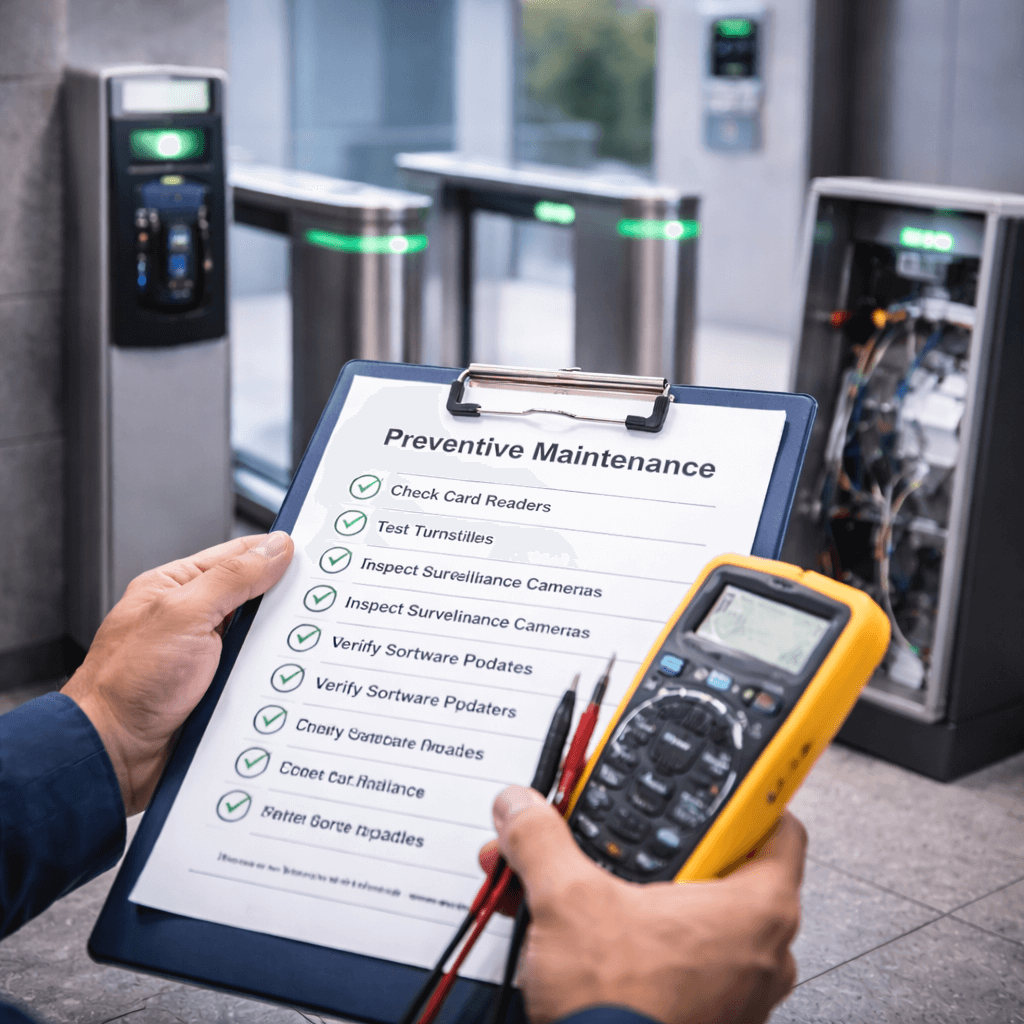
Preventive Maintenance and System Reliability Are Gaining Attention
For many years, access control and security systems were treated as “install and forget” infrastructure. Maintenance was often reactive—addressed only when something stopped working.
That mindset is changing.
In 2026, preventive maintenance and system reliability are becoming central to how buildings evaluate and manage security systems.
From Reactive Fixes to Planned Reliability
Modern buildings are realizing that security downtime is not just a technical issue—it is an operational risk.
A failed reader, misaligned turnstile, or malfunctioning barrier can lead to:
-
access delays during peak hours
-
security exceptions handled manually
-
increased reliance on guards
-
poor tenant or visitor experience
-
incomplete access logs
Preventive maintenance shifts the focus from emergency fixes to planned reliability.
Why Reliability Matters More Than Ever
Access control systems today are deeply integrated into daily operations. When they fail, the impact is immediate.
Reliability now affects:
-
employee and tenant movement
-
visitor flow and reception efficiency
-
parking and traffic management
-
elevator access and floor zoning
-
audit trails and compliance records
As systems become more interconnected, a single failure point can affect multiple areas of a building.
What Preventive Maintenance Really Covers
Preventive maintenance is not just cleaning devices or tightening screws. A proper program looks at the system as a whole.
Typical preventive maintenance activities include:
-
inspection and testing of readers, controllers, and sensors
-
alignment and calibration of turnstiles and barriers
-
checking access rules and time schedules
-
reviewing system logs for early warning signs
-
firmware and software health checks
-
verifying backup and fail-safe behavior
This approach helps catch issues before users notice them.
Maintenance Is Now a Design Consideration
More property managers and consultants are now asking maintenance-related questions early in a project:
-
How often does this system need servicing?
-
Are spare parts locally available?
-
Can issues be diagnosed remotely?
-
How quickly can support respond?
-
What happens during power or network interruptions?
In 2026, maintainability is part of system design, not an afterthought.
Preventive Maintenance Protects Long-Term Investment
Security systems represent a significant capital investment. Without maintenance, equipment life shortens and replacement costs rise.
Buildings with structured maintenance programs typically see:
-
longer equipment lifespan
-
fewer emergency repairs
-
more predictable operating costs
-
better system performance over time
Preventive maintenance helps protect both hardware investment and operational continuity.
Reliability Builds Trust with Users
Tenants, employees, and visitors rarely think about access control—until it fails.
Consistent system performance builds:
-
confidence in building management
-
smoother daily operations
-
fewer complaints and exceptions
-
stronger perception of professionalism
In many cases, a reliable system is invisible—and that’s the goal.
Maintenance Supports Compliance and Accountability
Access control systems are increasingly used for:
-
audit trails
-
incident investigation
-
compliance reporting
-
occupancy tracking
Preventive maintenance ensures that:
-
logs remain accurate
-
devices are synchronized
-
access rules are enforced consistently
This is especially important in shared buildings where accountability matters.
A Growing Shift in 2026
The trend is clear: buildings are moving away from “break-fix” security management.
In 2026:
-
preventive maintenance is being budgeted upfront
-
service-level agreements are prioritized
-
system health is reviewed regularly
-
reliability is treated as a performance metric
Security is no longer judged by how advanced it looks—but by how consistently it works.
Key Takeaway
Modern access control systems are only as good as their reliability. Preventive maintenance is no longer optional—it is essential to keeping buildings secure, efficient, and professional.
A well-maintained system lasts longer and performs better. Preventive maintenance helps ensure your access control, turnstiles, elevators, and parking systems remain reliable year after year.